 ONGUGUSocial · Video · Shop · Games
Watch Free Short Dramas, Record a Beautiful Life
Watch free short dramas · Record a beautiful life

Emotional value Emotional value A 2025 Norwegian drama film directed by Joachim Trier, co-produced by Norway, Germany, Denmark, France, Sweden, the UK, and Turkey, written by Joachim Trier and Eskil Vogt, and starring Renate Reinsve, Stellan Skarsgård, Inga Ibsdotter Lilleaas, and Elle Fanning. The film premiered at the 78th Cannes Film Festival in France on May 21, 2025, and was released in mainland China on April 17, 2026. The film follows Nora as she reunites with her estranged father Gustav, a former acclaimed director who tries to cast stage actress Nora in his highly anticipated comeback film, only to be rejected. When Hollywood star Rachel, who admires Gustav, takes on the lead role in her place, Nora is forced to confront her complicated history with her father. In 2025, the film won the Grand Prix of the main competition at the 78th Cannes Film Festival. In 2026, it won the Best International Feature Film at the 98th Academy Awards, becoming the first Norwegian film to win that award. http://duanjufenxiang.ongugu.com/

Shattered Love Shattered Love Piraiya Marisorn and Pariya Piyapanopa star in the new drama (หัวใจช้ำรัก), a Thai GL (Girls' Love) television series produced by Fabel Entertainment. Filming began in late February 2026, and the series premiered on March 28, 2026, on Fabel Entertainment's official YouTube channel in Thailand. The show's tagline is "Hatred burns the wilderness to ashes, love endures through the night." The series follows Arisa, who returns to avenge her mother's death against the capitalist responsible. In her fight against the forces of darkness, she meets and falls in love with Lalin (Laila), a piano girl, exploring the complicated dynamic of "when the person you love deeply turns out to be the daughter of the person you hate most." The series consists of 8 episodes in total. http://duanjufenxiang.ongugu.com/

Fantastic Beasts School 4 Director: Bernhard Jasper / Maggie Peren Screenwriter: Nicole Ambosch / Margit Auer / Alexandra Kordes / Mirjam Müntefering / Thorsten Näter Starring: Samuel Schneider / Emilia Maier / Loris Sichrovsky / Leonard Conrads / Purnima Gretz / More... Genre: Family / Fantasy / Adventure Country/Region of Production: Germany Language: German Release Date: 2025-09-25 (Germany) Runtime: 102 minutes Ida's friend Miriam comes to Winterstein for three months, but a secret hangs over their friendship. Miriam is given the goblin Fitzgerald as her helper, while the beloved Max receives the owl Muriel. When the school is threatened with sale, the entire magical community is in danger. So, can the upcoming school challenge turn the tide and save the school? http://duanjufenxiang.ongugu.com/

The House of the Spirits Director: Francesca Allegria, Andrés Wood Cast: Alfonso Herrera, Nicole Wallace, Dolorès Fonzi, Fernanda Urrejola This series is adapted from Isabel Allende's classic novel of the same name, chronicling the rise and fall of the Trueba family over nearly a century. The story centers on the marriage of Esteban Trueba and Clara del Valle, unfolding around the love, hatred, secrets, class conflicts, and political upheaval among family members. Clara possesses mystical abilities, able to communicate with the dead and foresee the future, while Esteban relentlessly pursues power and control, tearing the family apart. As descendants such as daughter Blanca and granddaughter Alba take the stage one by one, their personal fates are gradually swept up in social change, revolutionary storms, and historical trauma, interweaving reality with magic, ultimately coalescing into a family epic about memory, love, and loss. http://duanjufenxiang.ongugu.com/

The dark scheme manipulates the defender of the trial. Director: Toshiyuki Mitsuhashi / Yuta Shimohatake / Toru Hayashi Screenwriter: Hisao Yoshitaka / Sayaka Ichihigashi / Sayaka Abe / Jun Hagimori / Katsuhiro Kitaura / More... Cast: Gackt / Katsuhisa Namase / Kazuki Kitamura / Mirai Shida / Fūju Kamio / More... Genre: Drama / Mystery Country/Region of Production: Japan Language: Japanese Premiere: 2026-07-20 (Japan) Episode Runtime: 54 minutes This work is a completely original legal entertainment piece that tells the story of Uramajō Naoto, a brilliant lawyer dubbed the "fabrication genius," who uses his own clever "lies" as a weapon to expose the truth against the "lies" concocted by powerful forces trying to evade justice. It depicts the image of a dark hero who saves his clients by any means necessary. Uramajō is an unconventional protagonist who works both as a capable lawyer and a first-class architect. He uses his architectural knowledge to expose contradictions in evidence and testimony, deploys his architecture firm team as his hands and feet, and corners his opponents with meticulously crafted traps. The evidence built from lies is all part of his "black stratagems"—he is a man who does not hesitate to use lies for the justice he believes in. http://duanjufenxiang.ongugu.com/

The New Version of Sweet Revenge
A Thai television series directed by Anuwat Thanomrod in 2026
"The New Sweet Revenge" is a romantic comedy produced by Channel 3 Thailand, starring Phongsakorn Mettarikanon and Nannida Tichashi.
The series is a remake of the classic Thai drama "Sweet Revenge" from 2012 and premiered on Channel 3 Thailand on March 6, 2026.
Free download of film and TV resources
http://duanjufenxiang.ongugu.com/

The Whistle of Death The Whistle of Death The Nun Final Destination A Nightmare on Elm Street The Nun The Whistle of Death Imagine blowing an ancient whistle and hearing, instead of an ordinary sound, a piercing shriek like the wailing of a thousand lost souls. Even more terrifying, that shriek doesn't summon any external monster—it summons you yourself: the horrifying form you'll take at the moment of your death, decades from now. Now, this "future you" is crawling back from the end of time with one purpose: to end your life early. This isn't sci-fi—it's the core rule of the most spine-chilling horror film of early 2026: once the ghost whistle blows, your death comes early, and the reaper hunting you is your own future self. Directed by Colin Hardy and starring "the little wolf girl" Daphne Keen, this R-rated horror film hit North American theaters on February 6, 2026, and officially landed on streaming platforms on March 3. The moment it dropped, many horror fans tagged it as "a campus version of Final Destination," but its core is far more despairing than a mere chain of accidental deaths. The story begins at Perrington High School. Transfer student Chris opens her newly assigned locker, which once belonged to a basketball star who mysteriously self-immolated six months earlier. Deep inside, her hand brushes against a cold, intricately carved object—a clay whistle shaped like a skull, etched with ancient inscriptions. This whistle isn't pure invention by the screenwriters; its prototype is the real archaeological "Aztec Death Whistle," discovered in a temple dedicated to the wind god in Mexico. Its internal dual-chamber resonance structure produces a bone-chilling shriek. History teacher Mr. Craven recognizes it as a precious Aztec artifact, worth a fortune, and even toys with selling it online. To test whether the whistle still works, he curiously blows it. And with that single blow, the shrill sound acts like a key unlocking the gates of hell—everyone present who hears it has their fate invisibly marked. The curse's rules are simple, brutal, and suffocating: the whistle marks you. The manner of your predetermined death won't change, but its timing is drastically accelerated. If you were meant to die of lung cancer at 50, you might start coughing violently and spitting blood tomorrow, enduring all the agony of terminal cancer in a compressed span before dying. If you're fated to die in a car crash, then even as you lie peacefully in your own bed, an invisible force will twist and shatter your body as if struck by a speeding vehicle. One of the film's most unforgettable death scenes befalls high schooler Dean. Dean has a bad habit of drinking and driving, and his parents often warn him, "This will kill you." After being cursed, he suffers a "phantom car accident" in the absolute safety of his bedroom. No car, no impact sound—but his body is slammed and dragged by a colossal unseen force. Viewers watch his muscles tear apart, bones pierce through skin, and his whole body launched and dropped in ways that defy physics. His parents are right outside the door, helpless against the supernatural tragedy unfolding within. Critics have called this scene "the 2026 version of the bed-swallowing scene from A Nightmare on Elm Street," shattering any sense of safety in everyday environments. Another girl, Grace, meets a death of eerie stillness. She might have aged peacefully in a hospital bed, but the curse accelerates the process. On screen, viewers see her youthful face wither within seconds, skin wrinkling and spotting with age, hair thinning to gray, until she collapses into a shriveled mummy. This "devoured by time in an instant" concept triggers a deeper dread of aging and life's fleeting nature than any gore. As her companions die one by one in their fated yet decades-early ways, the surviving protagonists spiral into panic. They realize that running and hiding are futile, because what hunts them isn't an external monster—it's their own inevitable futures. Desperate for a way out, Chris and her friend Ellie trace the whistle's origins. They find Mrs. Remore, an elderly woman in town who knows the truth. Living in a gloomy mansion, she reveals a more hopeless reality: this "death whistle" doesn't create new ways to die; it acts like a cold accelerator, dragging the moment of your life's end forcibly before you. You can't change how you die—you can only watch it arrive early. This setup obliterates any fantasy of "changing fate," plunging both characters and audience into the abyss of destiny. Amid the omnipresent threat of death, the film weaves in delicate emotional threads. The budding same-sex romance between Chris and Ellie feels precious and fragile against the apocalyptic backdrop. One scene shows Chris repeatedly composing and deleting a text to Ellie, vividly capturing adolescent hesitation and awkwardness in expressing feelings, adding a touch of real humanity to this blood-soaked film. To escape the hunt, the survivors blend into the crowd at the town's annual harvest festival. But the festive atmosphere becomes the perfect backdrop for horror. A climactic chase unfolds in the festival's straw maze. Designed to be impossibly vast and convoluted, filled with sudden dead ends and twisted paths, one character is relentlessly pursued by their own death avatar, with nowhere to run. The maze's claustrophobia and disorientation push psychological tension to its peak. Meanwhile, Nick Frost's history teacher Craven provides dark comic relief. Profane and shrewd, his first instinct upon recognizing the whistle as an antique is to claim it and cash in. It's his greed and curiosity that lead him to blow it, dragging himself into the inescapable curse—a deeply ironic character. The film's visual style carries over director Colin Hardy's strengths from The Conjuring 2: a persistent, bone-deep atmosphere of dread. It avoids cheap jump scares, instead eroding the audience's psychological defenses through cold color palettes, unsettling sound design (especially that iconic whistle), and surreal horror invading everyday settings. Ontario's tranquil suburban scenery contrasts sharply with the Halloween-maze-like gloom, making the terror resonate more deeply. As the investigation deepens, Chris and Ellie uncover the whistle's older origins: it was brought back decades ago by a traveler from Guatemala, whose entire family fell under its curse. The climax takes place in an abandoned steel mill at the town's edge, where the survivors are forced to confront their deepest fears in a final struggle. With its core premise of "being hunted by your future self," it injects fresh despair into the traditional "cursed object" horror subgenre. It doesn't just showcase bizarre deaths—it probes a chilling question: if you could see your life's end in advance and knew it was racing toward you, how would you spend the time you had left? The film's copious blood and violence ensure its visual punch as an R-rated horror, but what truly lingers after the credits is that sigh about fate echoing in your mind. http://duanjufenxiang.ongugu.com/

Miami Vice
US, Germany, Paraguay, Uruguay 2006, a film directed by Michael Mann
Miami Vice is an action crime film produced by Universal Pictures, directed by Michael Mann, and starring Jamie Foxx, Colin Farrell, Gong Li, Naomi Harris, etc. It is adapted from the TV series of the same name from the 1980s. The film is a co-production of the United States, Germany, and Paraguay.
Free download of film and TV resources
http://duanjufenxiang.ongugu.com/

Pilot Program for the Retraining of Salarymen
TV series directed by Lam Gin Cheung in 2025
"Social Livestock Retraining Pilot Program" is a Hong Kong drama TV series directed by Lam Gin Cheung, starring Wong Chi Tak, Lam Huen Yu, Mak Pui Tung, Tong Ho Yin and Ai Wei. It premiered in Cantonese in Hong Kong in 2025, with each episode lasting approximately 45 minutes.
The series follows Yu Hui, an employee of the Shap Yuen Group, and five other staff members who are forced to participate in a retraining program. Together with six primary school students, they form the "Class 4S" at Kan Sik Primary School, where they undergo supplementary lessons in both workplace and life skills under the guidance of homeroom teacher Miss Yi. Yu Hui is expelled for violating the rules, and behind the entire training program lies a hidden gambling scheme between Principal Choi Siu Ki and Ye Yat Wo, the boss of the group.
Free download of film and TV resources
http://duanjufenxiang.ongugu.com/

After the divorce, I became the darling of the family.
30,000+ short-drama resources free to download (updated daily)
http://duanjufenxiang.ongugu.com/

The Great Chase: Metropolitan Police Department SSBC Violent Crimes Division Season 2/Season 1 Manhunt: Metropolitan Police Department SSBC Violent Crimes Division A 2025 Japanese TV drama starring Osamu Oonou, produced by TV Asahi. Directed by Naoki Tamura, Keisuke Toyoshima, and Takashi Komatsu, and starring Osamu Oonou, Masaki Aiba, and Nao Matsushita. The drama premiered on July 9, 2025. Synopsis: The story is set at the SSBC (Support and Analysis Center), a specialized unit newly established by the Tokyo Metropolitan Police in 2009, responsible for tracking and analyzing investigations. As key figures in modern criminal investigations, they are tasked with collecting and analyzing footage from security cameras, analyzing smartphones and computers, and profiling criminal suspects. The drama is the first to focus on these key figures of modern criminal investigation. Through their analysis of surveillance footage, communication devices, and the construction of suspect profiles, the series depicts high-intelligence criminal pursuits interwoven with human nature, making it a modern crime drama that combines mystery and suspense with an ensemble cast. It also features the newly established "Violent Crime Division" — an elite team dedicated to assisting in solving major heinous crimes such as murder, robbery, and arson — portraying the workers and the human landscape there. http://duanjufenxiang.ongugu.com/

Wuthering Heights Wuthering Heights A drama film directed by Emerald Fennell for the US and UK in 2026. It was directed by Emerald Fennell, written by Emerald Fennell and Emily Brontë, and starring Margot Robbie (also serving as producer) and Jacob Elordi. The film was released in the US on February 13, 2026. Adapted from Emily Brontë's novel of the same name, it tells the passionate and tragic love story between Heathcliff, an orphan adopted by Mr. Earnshaw, and Catherine, Mr. Earnshaw's daughter, set on the Yorkshire moors in northern England. As of April 1, 2026, the film has grossed approximately $236 million worldwide. As of March 21, its total box office in China surpassed 20 million RMB. In the late 18th century, young Catherine Earnshaw (Margot Robbie) enjoys running wild across the Yorkshire moors when she gains a new companion. A ragged little vagrant, Heathcliff (Jacob Elordi), moves into her home at "Wuthering Heights" with her father. Years later, Catherine and Heathcliff grow extremely close, developing a tense, almost incestuous attraction. Clearly they love each other, even as Catherine expresses interest in a wealthy aristocrat who has moved nearby, Edgar Linton (Shazad Latif). Catherine ultimately marries Edgar, and a furious Heathcliff leaves, returning years later with his own fortune, vowing to win Catherine back or exact revenge. He sets his sights on Edgar's impressionable young ward, Isabella (Alison Oliver). This triggers a chain of manipulation and cruelty. Meanwhile, Catherine Earnshaw gains material comfort by marrying Edgar but falls into emotional emptiness. Catherine Earnshaw's mental decline is depicted as a fevered spiral of hallucinations, guilt, and longing; she develops depression and ultimately dies of sepsis caused by a long-untreated miscarriage. http://duanjufenxiang.ongugu.com/

The Shawshank Redemption The Shawshank Redemption The Shawshank Redemption The Woman in the Room An American drama film directed by Frank Darabont in 1994 | Basic Information: Produced by Castle Rock Entertainment, directed by Frank Darabont, written by Stephen Edwin King and Frank Darabont, and starring Tim Robbins and Morgan Freeman, this is an American drama film. The film premiered at the Toronto Film Festival on September 10, 1994, and was released in the United States on September 23. A 4K remastered version was released in mainland China on August 28, 2026. Plot Summary: The story follows young banker Andy Dufresne, who is wrongly convicted of murdering his wife and her lover, and sentenced to two consecutive life terms at Shawshank State Penitentiary. After entering prison, he befriends inmate Red, a longtime prisoner skilled in smuggling contraband, and the two forge a deep bond over nearly two decades. Using his financial expertise, Andy handles tax matters for the guards and warden while secretly helping them launder money. When a young inmate named Tommy, who could prove Andy's innocence, is silenced by the warden, Andy becomes determined to escape. Using a small rock hammer, he spends nineteen years digging a tunnel through his cell wall, then crawls through a sewage pipe during a rainstorm to make his escape. After getting out, he takes all the evidence of the warden's corruption and money laundering, exposing the prison's systemic abuses. Red is eventually paroled and finds the cash Andy left beneath an oak tree, and the two reunite on a Mexican beach. Behind the Scenes: The film is adapted from a novella written by Stephen Edwin King in 1982. Director Frank Darabont bought the film adaptation rights to the short story from Stephen for $1 and turned it into a short film, marking their first collaboration. Principal photography began in June 1993 and concluded in August of the same year. Awards: In 1995, the film received seven nominations at the 67th Academy Awards, including Best Picture. That same year, it won Best Foreign Language Film at the 19th Japan Academy Film Prize. In 2015, it was selected for the United States National Film Registry by the Library of Congress. As of August 2026, the film holds a rating of 9.3 on IMDb and 9.7 on Douban, with over three million global users having rated it. http://duanjufenxiang.ongugu.com/

Peacock Dance Peacock Dance Peacock Dance Peacock Dance of the Departed Princess A 2026 South Korean romance film directed by Lee Chung-phil. It is a South Korean romance film produced by Netflix, made by The Lamp, directed by Lee Chung-phil, written by Park Min-kyu, and starring Ko A-sung, Moon Sang-min, and Byun Yo-han. Adapted from the novel by writer Park Min-kyu, it tells the story of three people who cannot even like themselves, who shine on each other while facing life and love. The film was released on the streaming platform Netflix on February 20, 2026. As of February 25, 2026, the film ranked 7th in Netflix's Global Top 10 non-English films, with 2 million views; as of March 4, it ranked 4th in Netflix's Global Top 10 non-English films. Plot Summary: Gyeong-rok (played by Moon Sang-min), who witnessed his father betraying the family and his parents' love falling apart in childhood, grows up to be a young man with no clear goals in life. He works part-time at a department store, where he befriends a coworker named John (played by Byun Yo-han), who loves rock music and has a free spirit, and the two gradually become friends. During this time, Gyeong-rok notices a female employee called "Dinosaur," Mi-jeong (played by Ko A-sung), and becomes interested in her. Mi-jeong is a regular employee who entered the company with top scores, but because of her plain appearance and extremely timid personality, she is always ostracized and assigned menial tasks in the basement. Although others describe her as an unfortunate child, Gyeong-rok cannot help but pay attention to her. One day, he hears piano music through the crack of a door outside a recital hall and is drawn to Mi-jeong, who appears especially moving while immersed in the music. Worried that Mi-jeong might get hurt, John tries to divert Gyeong-rok's attention, but this only makes Gyeong-rok's feelings more resolute. In the end, John, concerned for Gyeong-rok who is struggling alone, brings Mi-jeong to the place they usually hang out. From then on, Gyeong-rok and Mi-jeong gradually become friends, cautiously conveying their budding feelings for each other. http://duanjufenxiang.ongugu.com/

Amrum Amrum A German drama film directed by Fatih Akin in 2025, it is a drama film directed by Fatih Akin, written by Fatih Akin and Hark Bohm, and starring Jasper Billebeck, Laura Tonke, Lisa Hagmeister, Diane Kruger, and Matthias Schweighöfer. It was released in Germany on October 9, 2025. Set in the final weeks of World War II in the spring of 1945, the film revolves around ten-year-old Nanning, whose father is fighting on the front lines. He does everything he can to help his mother support the family—hunting seals, fishing at night, and working in the fields. However, the long-awaited peace brings entirely new conflicts, and Nanning must find his own path in life. In 2026, the film was nominated for the Best Film award at the 76th German Film Award (Lola). As of June 4, 2026, the film has grossed $9,278,789 worldwide. Plot Summary: In the summer of 1945, Nanning (Jasper Billebeck) is working on the farm run by Thea (Diane Kruger) along with his friend Hermann (Kian Köppke). While plowing the fields, a wagon full of people stops. After a brief conversation with the driver, Thea learns that the people on the wagon are Russian-German refugees sent from Berlin. Tired of the war and aware of the dwindling resources in this tight-knit community, she casually rails against the crimes of the Nazis, hoping it will all end soon. But Nanning doesn't grasp the meaning of Thea's words and mentions it during dinner with his mother Hille (Laura Tonke) and his aunt Ena (Lisa Hagmeister). He asks whether his father will be coming home soon, since the war is nearly over. Hille, a staunch Nazi supporter, is deeply shaken by this question. The next day, she reports Thea to the Nazi authorities. Nanning loses his job and is called a snitch by his peers. Even so, he remains loyal to Thea. On the island of Amrum, as Hille—pregnant with her fourth child and sinking into depression as Hitler's influence wanes—casually mentions wanting white bread, butter, and honey, Nanning, hoping to make his mother happy, takes this as a mission. He embarks on a series of journeys to find these rare foods. His adventures take him all over the island, and along the way, he interacts with a variety of people holding different political views. At the same time, he learns more about his own family's personal history and the hidden sides of his parents. http://duanjufenxiang.ongugu.com/
Ring Brothers Ring Brothers Ring Brothers In 2026, a film starring Arjun Ashokan and Roshan Mathew is an Indian drama, comedy, action, and sports film scheduled for release in 2026, directed by Adhvaith Nayar, written by Adhvaith Nayar and Sanoop Thykoodam, and starring Arjun Ashokan, Roshan Mathew, Mammootty, Vishak Nair, and others. The film tells the story of a group of misfits in Fort Kochi who band together to create a wrestling troupe, facing internal competition and comical brawls, and growing to tackle bigger obstacles along the way. Film Information The film (English title: Chatha Pacha: The Ring of Rowdies) is directed by Adhvaith Nayar, written by Adhvaith Nayar and Sanoop Thykoodam, and stars Mammootty, Arjun Ashokan, Roshan Mathew, Vishak Nair, Ishan Shoukath, among others. Its genres are drama, comedy, action, and sports, produced in India, with languages including Malayalam, Tamil, Telugu, Kannada, and Hindi. It is scheduled for release in India on January 22, 2026, with a runtime of 134 minutes. The film's plot follows a group of misfits in Fort Kochi who unite to create a wrestling troupe, facing internal rivalry and humorous fights while growing to overcome greater challenges. Plot Summary In Fort Kochi, a group of misfits bands together to found a wrestling troupe, confronting internal competition and comedic brawls while maturing to deal with bigger obstacles. http://duanjufenxiang.ongugu.com/

Dresden Sun Times Dresden Sun Times Dresden Sun Times Dresden Sun Times Dresden Sun Times Dresden Sun Times Plot Summary: A Shocking Conspiracy That Could Decide the Fate of the World. The story takes place in a highly advanced future world. A smart, principled mercenary with a traumatic past (played by Christina Ricci) teams up with an insider to steal a mysterious item known as "the sphere" from the powerful Peredor Corporation. This item is not only priceless but also holds secrets capable of reshaping the global order. Meanwhile, C Corporation and Earth Corporation, both vying for global dominance, are also seeking a non-world technology solution to support a scientist's project. A financial analyst working at Mutual One, a powerful investment firm, finds himself in a dilemma because he despises his job. Caught between deadly corporate rivals, financial fraud, and technological espionage, he is ultimately forced to flee from the world's most twisted military contractor. As the plot deepens, a shocking conspiracy concerning the fate of the world gradually comes to light. All forces engage in a thrilling battle over "the sphere" and control of future technology. The mercenary, the scientist, the financial analyst, and other characters play crucial roles in this storm, and their choices and actions will directly affect the future of the world. Starring Cast: A Stellar Lineup of Powerhouse Actors. The cast is nothing short of dazzling, bringing together numerous powerhouse stars. Christina Ricci will play a mercenary with a traumatic past, infusing the character with profound depth and emotion through her outstanding acting and unique charm. Mena Suvari will portray a mysterious insider, whose involvement adds more suspense and uncertainty to the plot. Linus Roache, Steven Ogg, Samantha Jo, and other actors will also join the cast, delivering a visual and emotional feast for the audience. Genre and Theme: The Perfect Fusion of Sci-Fi, Action, and Thriller. This is a film that blends elements of science fiction, action, and thriller. It not only showcases the technological allure and visual spectacle of a future world but also delivers an unparalleled cinematic experience through intense action sequences and a gripping storyline. At the same time, the film delves into profound themes such as tech ethics, corporate conspiracies, and human struggle, prompting audiences to reflect on the future world. Conclusion: Awaiting the Stunning Release. With its unique plot setup, powerful cast, and high production quality, this film has become one of the most anticipated sci-fi action movies of 2026. It will not only lead audiences into a future world full of the unknown and wonder but also, through a battle over the fate of the world, spark deep reflection on technology, humanity, and society. Let us look forward together to this future blockbuster's stunning release in 2026 and witness this perfect fusion of sci-fi and action! http://duanjufenxiang.ongugu.com/

The Fortune Teller's Counterattack
A Thai TV series starring Phusit Ditaphisi and Yuki Durongsak in 2025
"The Fortune Teller's Counterattack" (Thai: การโต้กลับของซินแส) is a Thai TV series starring Phusit Ditaphisi and Yuki Durongsak, with 8 episodes in total. The series is a work that combines drama, LGBTQ+, and fantasy genres.
The series tells the story of Win, a fortune teller who, burdened by bad luck, must find a person of virtue within a year to turn his fortunes around. He meets Pleung, a ghost-hunting show host who staunchly believes in atheism, and their clashing beliefs spark a hilarious showdown between science and superstition. As a Thai drama blending metaphysics and scientific elements, it portrays the journey of the two from mutual opposition to cooperation.
Free download of film and TV resources
http://duanjufenxiang.ongugu.com/

Dead Man's Switch Dead Man's Switch A thriller directed by Gus Van Sant, written by Austin Kolodny, and starring Bill Skarsgård, Dack Montgomery, Al Pacino, Cary Elwes, and Colman Domingo, the film is based on a real hostage incident that occurred on February 8, 1977. The film premiered at the Venice Film Festival on September 2, 2025, had its North American premiere at the Toronto International Film Festival on September 7 of the same year, and is scheduled for a limited theatrical release in North America on January 9, 2026, expanding on January 16. The film runs 105 minutes. On July 21, 2025, the first stills were released; on October 29, the first trailer was unveiled along with the release date announcement; and on November 25, the official trailer was released. The film tells the story of Tony Kiritsis, a 44-year-old former real estate developer, who breaks into a mortgage company with a sawed-off shotgun, takes president Richard O. Hall hostage, and connects the trigger to his own neck with a "dead man's switch" device, demanding $5 million in compensation, immunity from prosecution, and a public apology. Tony Kiritsis thereby forces Richard O. Hall to walk through the streets of downtown in near-zero-degree weather in front of police and reporters. Plot Summary: Adapted from the real hostage incident of February 8, 1977, the film follows Tony Kiritsis, a 44-year-old former real estate developer, who breaks into a loan company with a sawed-off shotgun and takes president Richard Hall hostage. He uses a "dead man's switch," holding a button in his hand that, if released, will detonate an explosive device strapped to Hall. He thereby forces Hall to walk through the streets of downtown in near-zero-degree weather in front of police and reporters. Kiritsis demands $5 million in compensation, immunity from prosecution, and a public apology. This breathtaking standoff shocks the world. http://duanjufenxiang.ongugu.com/

Strawberry Moon Strawberry Moon A 2025 Japanese drama film directed by Mai Sakai is a drama film directed by Mai Sakai, written by Yoshikazu Oka, starring Ami Tōma, Jun Saitō, Haruka Sugino, and Aya Nakajō, released in Japan on October 17, 2025. The film is adapted from the novel of the same name by Nao Akutagawa, and tells the story of high school girl Moe Sakurai, who, despite suffering from a serious illness, confesses her love to her classmate Hinata Satō and embarks on a passionate romance during the last six months of her life. The two vow to watch the strawberry moon, a symbol of eternity, together, but Moe then disappears, leading to a pure love story that spans 13 years. As of June 15, 2026, the film has grossed $643,507 at the Japanese box office. Synopsis: With only six months left to live, Moe Sakurai (played by Ami Tōma) bravely pursues love in the spring of her first year of high school. Due to her frail health, Moe has spent most of her life at home, never attending school or making friends. When she is told she has only six months to live, her family is consumed by grief, but Moe decides to attend high school for a certain reason. On the day of the entrance ceremony, Moe meets her classmate Hinata Satō (played by Jun Saitō) for the first time and immediately confesses her feelings to him. Although surprised, Hinata accepts Moe's passionate pursuit, and the two begin dating. As lovers, they grow closer, and on Moe's birthday, they go together to see the strawberry moon, which legend says will unite lovers forever. However, from that day on, Moe disappears from school and becomes unreachable. http://duanjufenxiang.ongugu.com/

Come on! Golden Come! Come on! Kim Rae-ho! Itaewon Class The 2026 TV drama starring Eric Chou and Cecilia Yip is a 12-episode series produced by Damu Film and Television, with story creation and coordination by Jian Liying, co-directed by Gao Bingquan and Zeng Yingting, written by Feng Bodi, and starring Eric Chou, Cecilia Yip, Shao Yuxi, Huang Guanzhi, and Lin Siyu. The drama is adapted from the Korean Kakao Webtoon comic and tells the story of Zhou Luyong, who embarks on a journey to uncover the truth after his father's death, while joining forces with his companions to protect the family restaurant "Jinlai Hao." Step by step, he searches for his own beliefs and future amid friendship, family, love, and real-world challenges. The drama premiered on HBO Max on July 31, 2026. Synopsis: Zhou Luyong (played by Eric Chou) sets out on a journey to uncover the truth behind his father's death, but he must also hold onto the family restaurant "Jinlai Hao." Teaming up with his close friends, Luyong faces the various challenges of life together, vowing to seek justice for his deceased father. http://duanjufenxiang.ongugu.com/

Hamnet Hamnet Hamlet In 2025, the British and American drama film directed by Chloé Zhao was produced by Focus Features, directed by Chloé Zhao, written by Chloé Zhao and Maggie O'Farrell, and starring Jessie Buckley and Paul Mescal. It premiered at the Telluride Film Festival on August 29, 2025, had a limited release in North America on November 27, and expanded nationwide in the U.S. on December 12. Adapted from British author Maggie O'Farrell's novel of the same name, the film tells the story of Agnes and William Shakespeare, who marry against their families' wishes and have three children. However, a sudden plague takes the life of their son Hamnet, putting the couple's relationship to the test. Shakespeare pours his grief into his writing, producing a classic tragedy, while Agnes silently mourns her sorrow beneath the stage of the Globe Theatre in London. In September 2025, the film won the People's Choice Award at the 50th Toronto International Film Festival. In January 2026, it won Best Motion Picture – Drama at the 83rd Golden Globe Awards; in February, it won Best British Film at the 79th British Academy Film Awards; in March, the film received 8 nominations at the 98th Academy Awards, including Best Picture, with Jessie Buckley winning Best Actress for her role. http://duanjufenxiang.ongugu.com/

Proof of Love Director: Alice Douard Screenwriter: Alice Douard / Julie Debton / Lorette Polmans Starring: Ella Rumpf / Monia Chokri / Noémie Lvovsky / Emy Jurzec / Julien Gaspar-Oliveri / more... Genre: Drama / Comedy / LGBTQ+ Country/Region of Production: France Language: French Release Dates: May 17, 2025 (Cannes International Film Festival) / November 19, 2025 (France) Runtime: 97 minutes With only three months left until her daughter is born, Céline cannot sit still. As the other mother who never experienced morning sickness or fetal kicks, she must submit fifteen testimonies to the state machinery, all to "adopt" the child she has long yearned for. As she rushes from door to door collecting signatures, all kinds of opinions and advice on "how to be a mother" come flooding in—even her biological mother, who was absent while pursuing a piano career, suddenly re-enters her life. The awkwardness and reconciliation between two generations of mothers quietly ferment, echoed through black and white keys and DJ turntables in subtle harmony. Blood ties may be innate, but can the identity of motherhood truly be defined by a piece of paper? Carrying the critical acclaim from the Cannes Critics' Week, this film confronts the absurd plight of same-sex couples trying to start a family within the system with a light yet weighty touch. The camera follows the protagonist's relentless anxious footsteps, showing no bloody childbirth spectacle yet capturing the purest pulse of life in the delivery room. It brilliantly deconstructs the power perspective of traditional heterosexual families, and stands as a gentle hymn to all non-traditional families. http://duanjufenxiang.ongugu.com/
I'll Be Your Brother
I'll Be Your Brother is an American comedy film releasing in 2026, directed by BenDavid Grabinski and starring James Marsden, Derek James Trapp, Keith David and Eiza González. The film is presented in 1080p HD with embedded Chinese subtitles.
[Plot Summary] The film follows two mob bosses and the women they love as they fight for survival through the most perilous night of their lives. The appearance of a "time machine" turns that night into a chaotic, time-displaced farce. Brimming with comedic elements, the story showcases the hilarious adventures of the protagonists as they navigate a jumbled timeline.
Free movie downloads
http://duanjufenxiang.ongugu.com/

Spirit of the Demon Director: Daniel J. Phillips Writer: Daniel J. Phillips / Mike Harding / Ticia Madsen Starring: Mia Challis / Elizabeth Cullen / John Harlan King Genre: Horror Country of Origin: Australia Language: English Release Dates: 2025-10-04 (Melbourne Monster Film Festival) / 2025-11-20 (Australia) Runtime: 95 minutes A woman's hope for a miraculous healing turns into a nightmare when she encounters the vengeful spirit of a cursed witch, who is determined to seize her power and use her as a vessel for evil. http://duanjufenxiang.ongugu.com/

The Orphans The Orphans The Orphans "2025 film directed by Olivier Schneider" is a French thriller crime film directed by Olivier Schneider, starring Alban Lenoir, Dali Benssalah, and Anouk Grinberg, among others. The film was written by Olivier Schneider, Nicolas Perfaillit, and Alban Lenoir, and was released in France on August 20, 2025. The story revolves around two orphans, Gabriel and Idriss, who took different paths in life after a falling out, and are reunited by the tragic death of Sofia, a childhood friend from the orphanage, forcing them to cooperate to find Sofia's daughter, Leïla. Plot summary: The film's story follows Gabriel and Idriss, who went down different paths in life after an argument. Gab is an internal affairs police officer who plays by the rules; Driss is a fixer for the mob, serving the highest bidder. They are reunited by the tragic death of Sofia, their childhood friend from the orphanage. Sofia died in a car accident, leaving behind her 17-year-old daughter, Leïla. Determined to find the killer, Leïla unknowingly tracks down the son of a ruthless businesswoman who relies on vicious henchmen to protect family secrets. The two orphans must put aside their personal grudges and join forces to find Leïla before she does something irreversible. http://duanjufenxiang.ongugu.com/

Vacation Rules Director: Akiko Higashimura Screenwriter: Akiko Higashimura Cast: Kanna Hashimoto / Jong-hyeok Chae Genre: Drama Country/Region of Production: Japan Language: Japanese / Korean Premiere: 2026-07-27 (Japan) Episodes: 18 Single Episode Length: 15 minutes Midori Hoshino (played by Kanna Hashimoto), exhausted both physically and mentally from high-intensity work at a beauty clinic, loses her job when the clinic suddenly goes bankrupt. Following her brother's suggestion, she comes to a seaside villa left by her late grandmother, beginning a healing "life vacation" for her mind and body. Here, she meets Nishigami (played by Jong-hyeok Chae), the mysterious villa manager. With Nishigami's help, Midori enjoys a fulfilling romantic vacation, but Nishigami's melancholy eyes seem to hide a secret. http://duanjufenxiang.ongugu.com/

Turning sand into gold
30000+ short drama cloud drive resources free download (updated daily)
http://duanjufenxiang.ongugu.com/

Hey. Hey Hey A 2025 Japanese film directed by Tatsushi Ohmori is a Japanese biographical drama film directed by Tatsushi Ohmori, starring Masami Nagasawa and Masatoshi Nagase, released in Japan on October 17, 2025. In May 2025, the film released a teaser trailer and set its release date, and in July of the same year, it was announced that Shinobu Terajima, Ryohei Otani, Eisuke Shinohara, and Eita Okuno had joined the cast. The film centers on Oei, the daughter of Edo-period ukiyo-e artist Katsushika Hokusai, and tells the story of how she inherited her father's art name "Katsushika Oi" and established herself in the male-dominated art world. The art name originates from Hokusai's habit of calling out to his daughter "Hey, bring the rice!" and "Hey, bring the brush!" in daily life, with "O" meaning to respond and "i" symbolizing achievement and legacy. Masami Nagasawa's Oei, though unskilled in traditional women's crafts, breaks through social constraints with her artistic talent, while Masatoshi Nagase plays her father Hokusai, depicting the artistic inheritance and emotional bond between father and daughter. Story Summary: The protagonist Oei is Hokusai's daughter who displays astonishing artistic talent, with Hokusai once remarking that she surpassed him in bijin-ga (pictures of beautiful women). She receives the art name "Katsushika Oi" from her father, a name derived from Hokusai's habit of calling her with everyday phrases like "Hey, bring the rice!" and "Hey, bring the brush!"—"O" means to respond, and "i" means to act or achieve. It is a name passed from master to disciple, and a symbol passed from father to daughter. Although she cannot brew tea and is unskilled at needlework, she carves her own path in a male-dominated society with the artistic talent and boldness inherited from her father. The film focuses on the artistic inheritance between the Katsushika father and daughter. Character Introductions: Katsushika Oi (played by Masami Nagasawa) is the daughter of ukiyo-e master Katsushika Hokusai, possessing artistic talent that even Hokusai praised, saying she "surpasses me in bijin-ga." She has a fiery, strong-willed personality, is never without a cigarette, and is bold and carefree. Although unskilled in traditional women's crafts, she makes her own way in the male-dominated art world of the Edo period. She receives the art name "Katsushika Oi" from her father, a name derived from Hokusai's habit of calling her with everyday phrases like "Hey, bring the rice!" and "Hey, bring the brush!"—"O" means to respond, and "i" means to act or achieve. Katsushika Hokusai (played by Masatoshi Nagase) is a celebrated ukiyo-e artist, Oi's father and master. Masatoshi Nagase portrays her father Hokusai, depicting the artistic inheritance and emotional bond between father and daughter. Shinobu Terajima plays Oi's mother and Katsushika Hokusai's wife, Oei, who lives with her ailing youngest daughter and appears carefree but can see through everything about her daughter, hiding her sharp edge. Ryohei Otani plays Hatsugoro (Iwasa Bokusai), a popular painter under Hokusai's tutelage—a mild-mannered yet inscrutable artist who is naturally attractive to Oi. Eisuke Shinohara plays Motokichi, a neighbor who plays the shamisen and sings popular songs, having once performed in female roles on stage; he soothes Oi's heart with his graceful demeanor and refined conversation. Eita Okuno plays a retainer of the Tsugaru Domain, who visits repeatedly as an envoy of the Mutsu-Tsugaru domain lord requesting paintings from Hokusai, portraying this passionate samurai devoted to his duty with sincerity. Kaito Takahashi plays Hokusai's favored disciple Keisai Eisen (Zenjiro). http://duanjufenxiang.ongugu.com/

Quantum of Solace Quantum of Solace In 2008, Mark Forster directed the film, an action movie produced by MGM in 2008. Directed by Mark Forster, it stars Daniel Craig, Olga Kurylenko, Mathieu Amalric, and Judi Dench. The film premiered in the UK on October 31, 2008. The movie follows Bond's first mission after being betrayed by the woman he loved. After interrogating a man named White (Jasper Christensen), Bond and his superior M (Judi Dench) obtain intelligence about a criminal organization that once blackmailed Vesper. This organization is highly complex and more dangerous than anyone could imagine. Bond then embarks on a life-and-death battle to uncover the truth and destroy "Quantum." Plot Summary: Grieving the loss of his beloved, James Bond (Daniel Craig) decides to channel his grief into determination,全力 pursuing the truth to avenge Vesper. He and his superior M (Judi Dench) receive intelligence leading them to investigate a criminal organization that blackmailed Vesper, where he encounters the beautiful and mysterious Camille (Olga Kurylenko). Bond subsequently secretly investigates the cold-blooded merchant and crime syndicate leader Dominic Greene (Mathieu Amalric). Dominic uses an environmental organization as a front, but in reality controls a vast criminal enterprise, secretly plotting a coup in Bolivia, South America. By helping the exiled dictator Medrano regain power, he aims to acquire land that appears barren but holds the world's most important resources. Camille, who shares a deep enmity with Medrano, assists Bond in their joint quest for revenge. Bond travels across Austria, Italy, and South America to investigate, gradually closing in on the mastermind behind Vesper's death. Amidst a maze of betrayal, deceit, and deadly threats, Bond must stay one step ahead of the CIA, terrorists, and even M to thwart Dominic's conspiracy. http://duanjufenxiang.ongugu.com/

The Assault on Precinct 13 The Assault on Precinct 13 Directed by Jean-François Richet in 2005, this action thriller was produced by Focus Features in the United States. Directed by French filmmaker Jean-François Richet, the film stars Ethan Hawke, Laurence Fishburne, and Maria Bello. It was released in Canadian theaters on January 19, 2005. The film is a remake of John Carpenter's 1976 film of the same name, following a team of tactical police officers escorting a crime syndicate leader who are forced to take refuge in Precinct 13 after an armed ambush, only to encounter thieves targeting stolen goods. Synopsis In just a few hours, the New Year will arrive, and Precinct 13, Detroit's oldest police station, will embrace a fresh start after the holiday. Due to a sudden heavy snowfall making road conditions treacherous, several officers on duty plan to ring in the New Year at the precinct. Leading them is Jack Roenick (Ethan Hawke), a decent cop trying hard to forget his troubled past and, like Precinct 13, begin a new chapter in life. Earlier on December 31, somewhere in the city, police cornered drug lord Marion Bishop (Laurence Fishburne). After a fierce struggle, Bishop surrendered and was arrested by elite detectives led by Marcus Duvall (Gabriel Byrne). Bishop was then transported to prison, accompanied by other criminals including junkie Beck (John Leguizamo), small-time thug Smiley (Ja Rule), and mob member Anna (Aisha Hinds). But in this miserable snowstorm, the prisoner bus couldn't safely reach its destination and was forced to make a brief stop at Precinct 13. As night fell, the prisoners were locked in a temporary holding cell. This unexpected turn disrupted Jack's good mood, and even affected psychiatrist Alex (Maria Bello), who arrived shortly afterward. However, the feisty female officer Alice (Drea de Matteo) and veteran cop Jasper (Brian Dennehy) weren't about to miss out on the celebration. Just as the peaceful New Year atmosphere was settling in, two masked gunmen suddenly attacked the guards at the prisoner transport. The officers managed to repel the attack, but a far greater threat awaited them—to eliminate drug dealer Bishop and silence him for good, the criminals would unleash bloodshed on Precinct 13. Young officer Jack was not yet ready to take on a leadership role, and Bishop seemed like a lifeline; he had to join forces with the police he'd always been at odds with. As the saying goes, "the enemy of my enemy is my friend." Facing a powerful and mysterious armed group, both sides in Precinct 13—righteous and criminal—had no choice but to compromise. Armed with minimal weapons and fueled by maximum courage, they fought side by side through that terrible night. As the life-or-death siege intensified, the line between good and evil, right and wrong, began to blur. http://duanjufenxiang.ongugu.com/

Olympus Has Fallen Director: Roland Emmerich Writer: James Vanderbilt Starring: Channing Tatum / Jamie Foxx / Maggie Gyllenhaal / Jason Clarke / Richard Jenkins / More... Genre: Action / Disaster Country/Region of Production: United States Language: English Release Date: 2013-07-22 (Mainland China) / 2013-06-28 (United States) Runtime: 132 minutes (Mainland China) / 131 minutes (United States) Also Known As: White House Down Young Kyle (Channing Tatum) returns from the front lines in Afghanistan and takes a job with the Capitol security department, dreaming of one day protecting President Sawyer (Jamie Foxx). Kyle and his ex-wife have a young daughter, Emily (Joey King), who, because of her father's military service, has become a political fanatic—especially obsessed with President Sawyer and the White House. To make his daughter happy, Kyle promises to take her on a day tour inside the White House, and on the same day, he plans to apply for a position with the Secret Service under the leadership of Carol (Maggie Gyllenhaal). But on that very day, a group of unidentified armed militants infiltrates the White House in disguise and launches a manhunt for President Sawyer—a bloody storm is about to break. Can Kyle, while touring with his daughter, keep his cool and rescue the president? Can Kyle protect his daughter at the same time? And behind this seemingly unmotivated act of violence, is there a dirty secret being hidden? http://duanjufenxiang.ongugu.com/

Look for Body 2 Look for Body 2 Searching for the Body Parade A Japanese horror film released in 2025 starring Hashimoto Kanna, directed by Abu Shunichiro and starring Hashimoto Kanna, adapted from the novel of the same name by Weizard and the manga by Murase Katsutoshi, released in Japan on September 5, 2025. The film is the sequel to the 2022 film, telling a new story about protagonist Morisaki Asuka, whose body undergoes a sudden transformation after ending the "Search for the Body" loop. The film continues the previous installment's premise of "being killed by the red person and repeating the same day," set in a world three years after the previous film, focusing on Asuka's new round of the "Search for the Body" game at a midnight amusement park. Newly added characters include a five-person group consisting of Sakurai Kaito, Anzai Seira, Suzuki Fuku, and others, as well as a mysterious woman played by Kimura Yoshino. The film completed all location shooting in late September 2024, and from March to August 2025, multiple trailers and posters were released, announcing the return of Maeta Godo to the cast, with the Korean group Stray Kids performing the theme song. Plot Summary The previous film follows high school student Morisaki Asuka and her classmates repeatedly being killed by the "red person" each day; the sequel begins with a story about Asuka's body undergoing a strange transformation after ending "Search for the Body." The story is set in a world three years after the previous film, where a new "Search for the Body" game unfolds at a midnight amusement park. Five new high school student characters join, including Sakurai Kaito and Anzai Seira, while Takahiro (played by Maeta Godo) introduces the game rules. http://duanjufenxiang.ongugu.com/

Ms. Nasca
Ms. Nasca is a French film adapted from a true story. It follows the heroine who unexpectedly gets involved in archaeological work in Peru. Initially, she only works as a translator, but before she knows it, she discovers a path to explore her life and career—searching for the mysterious symbols and writings left by Peruvian ancestors, trekking on foot to document them, and even using every means at her disposal to prevent their destruction. In the end, she fulfills her mission and leaves a precious legacy to the world. It's a passable biopic, with no surprises along the way. All in all, if you're interested, it's worth a try.
Free download of film and TV resources
http://duanjufenxiang.ongugu.com/

The World Is Not Enough The World Is Not Enough The 1999 film directed by Michael Apted is an action drama starring Pierce Brosnan, Sophie Marceau, and Robert Carlyle. The film was released in the United States on November 8, 1999. The story follows James Bond as he teams up with Dr. Jones to thwart the scheme of international terrorist Renard, who threatens to disrupt the power struggle among global forces caused by the imbalance in world oil supply, putting Bond on a dangerous mission. James Bond recovers $5 million in bills for Sir Robert King, M's old friend, but the money has been soaked in chemicals, turning it into explosives. A brooch Sir Robert wears serves as a detonator, triggering an explosion that kills him and devastates MI6. Assigned by his female superior M, Bond must pilot a high-speed boat from the Nervion River in Bilbao, Spain, to the Thames in London, then across the Scottish Highlands, risking near-certain death to protect the oil tycoon's heir, the beautiful Elektra King. His adversary is Renard, a notorious international terrorist who even threatens to trigger a nuclear explosion in Turkey's massive oil pipeline. To monopolize oil supply rights, Renard has already assassinated oil magnate Sir Robert King and will not spare his heir either. In Azerbaijan, 007 finds a former Soviet agent who has turned from foe to friend, and tracks down Renard's whereabouts—he intends to steal Kazakhstan's nuclear warheads for even more shocking terrorist activities. Bond follows the trail to a nuclear military base in Kazakhstan, but just as he captures Renard, he is mistaken for a spy and the plan falls apart, allowing Renard to escape with the warheads. Elektra lures M into a trap and kidnaps her—it turns out Elektra and Renard are accomplices; she plans to detonate the plutonium from the nuclear warhead Victor stole, aiming to destroy the maritime oil transport route to monopolize oil shipping. But 007 gains something too: in Central Asia, he meets another Bond girl, nuclear weapons expert Dr. Jones, and the two join forces to take on Renard, engaging in a series of fierce battles. http://duanjufenxiang.ongugu.com/

Breakup Letter Breakup Letter An American film directed by Lasse Hallström in 2010. The film is adapted from the同名novel by American author Nicholas Sparks, directed by Lasse Hallström, and starring Channing Tatum, Amanda Seyfried, and others. The film was released in the United States on February 5, 2010. The film tells the story of John, who, under the sunny skies and on the beaches of his hometown, accidentally meets Savannah. Through Savannah, John rediscovers himself and love. Their sweet time together is always short-lived; John must return to the military and even be deployed overseas. As time passes day by day, this long-distance relationship maintained by letters and occasional meetings ultimately ends with a breakup letter from Savannah. Plot Summary: When John was 23, he stopped pursuing further education after high school, drifting from one job to another without purpose, spending his days drinking and carousing in bars, with a string of romances but never finding true love. Until one day, he resolutely enlisted in the military, and while on leave at home, under the sunny skies and on the beaches of his hometown, he accidentally meets Savannah, who is in the prime of her youth. At 21, Savannah's upbringing is vastly different from John's. Unlike John's reckless ways, she is innocent, kind, and straightforward, with firm principles and beliefs, and clear, definite goals. Through Savannah, John rediscovers himself and love. Their sweet time together is always brief; John must return to the military and even be deployed overseas. As time passes day by day, this long-distance relationship maintained by letters and occasional meetings ultimately ends with a breakup letter from Savannah. Heartbroken and devastated, John takes out the entire box of letters he had kept and burns them in a bonfire at the military camp. Later, John is wounded on the battlefield, and after recovering, he chooses to continue serving. However, when his father falls critically ill, John returns home to visit and stops by Savannah's house, only to find that things have changed—Savannah and her neighbor Tim have become lovers, and Tim is now gravely ill. Later, the two have dinner together at Savannah's home, where she can no longer hold back and pours out the hardships of living alone and the difficulties of her situation. Upon parting, Savannah says they'll see each other again soon, but John, having experienced life and death in war, hesitates for a long time and, unlike before, doesn't give the same reply—only saying goodbye. He sells all the coins his father had collected, keeping only a misprinted one, and anonymously donates the money to Tim, buying Tim time to say goodbye to his family. John returns to the battlefield. Later, he learns from Savannah's letter that Tim spent the last days of his life bidding farewell to friends. The film ends with the two embracing in front of a coffee shop—after the trials of war and separation, the couple finally comes together. http://duanjufenxiang.ongugu.com/

The Silent Fleet 2
A 2025 film directed by Kohei Yoshino
"The Silent Fleet 2" (also known as "The Silent Fleet: The Movie 2", "The Silent Fleet 2", "The Silent Fleet: Battle of the Arctic Sea") is a Japanese war drama film directed by Kohei Yoshino, written by Hikaru Takai, and starring Takao Osawa. It was released in Japan on September 26, 2025. The film retains the core creative team of its predecessor, with Kohei Yoshino continuing as director and Takao Osawa leading the cast.
The film focuses on the military conflict of the "Battle of the Arctic Sea," continuing the narrative framework of The Silent Fleet theatrical film series.
Movie resources free download
http://duanjufenxiang.ongugu.com

High-quality download of *Fear Night Talk* resources
Free download
http://duanjufenxiang.ongugu.com/
*Fear Night Talk* is a Spanish horror fantasy film slated for release in 2025, directed and written by Paul Urkijo Alijo, starring Yune Nogueiras, Elena Irureta, An Gabarain, and Iñake Irastorza. The film is primarily in the Basque language and has a runtime of 96 minutes.
【Synopsis】Set in the Basque region of Spain in the 17th century, the story follows Catalina, who flees her farmhouse at night and, while crossing a forest, realizes she is being followed. She encounters three washerwomen, and in the terrifying tales they tell, Catalina is astonished to find that she herself is the protagonist. Through nuanced character development and well-structured storytelling, the film builds a tense and chilling atmosphere.

Sanctuary Sanctuary A UK/US 2026 action thriller directed by Ric Roman Waugh, "Shelter" is produced by Black Bear International (UK), directed by Ric Roman Waugh, written by Ward Parry, and stars Jason Statham, Bill Nighy, and others. The film was released simultaneously in mainland China and North America on January 30, 2026. The story follows Michael Mason, a golden-agent elite in the spy world who retires to a secluded island, but is forced back into action after saving a young girl named Jessie. Under siege from the Black Kite organization, he tears through the conspiracy's veil with sheer hardcore combat prowess, embarking on a desperate breakout journey with the girl. As of February 8, 2026, the film has grossed over $16.4343 million worldwide. Plot Summary: Mason (Jason Statham) lives alone in a lighthouse, accompanied only by his loyal dog. It seems to be exactly the life he wants. In his spare time, he enjoys playing chess against himself, and his weekly supplies are delivered by a young girl named Jessie (Bodhi Rae Breinashi) and her uncle. During a storm, Jessie nearly drowns trying to get back to her uncle's boat, and Mason risks his life without hesitation to save her. He nurses Jessie back to health, even going out of his way to travel to the mainland to procure urgently needed medicine. But that decision proves to be a mistake, as a strike force soon storms his island with orders to shoot him on sight. It turns out Mason was once a special forces soldier who, driven by conscience, refused to carry out illegal orders and clashed with his superior, Manfort (Bill Nighy), after which he went into hiding for years. To exact revenge, Manfort swapped Mason's identity with that of a wanted terrorist, which is why MI6 launched the mission. But what they didn't anticipate was that Mason had rigged his hideout with numerous traps, quickly wiping out the attackers. Forced to go on the run with Jessie, he seeks help from a former colleague, Booth (Daniel Mays). Meanwhile, Manfort dispatches his deadliest assassin, "The Worker" (Brian Virgil), to eliminate Mason. http://duanjufenxiang.ongugu.com/
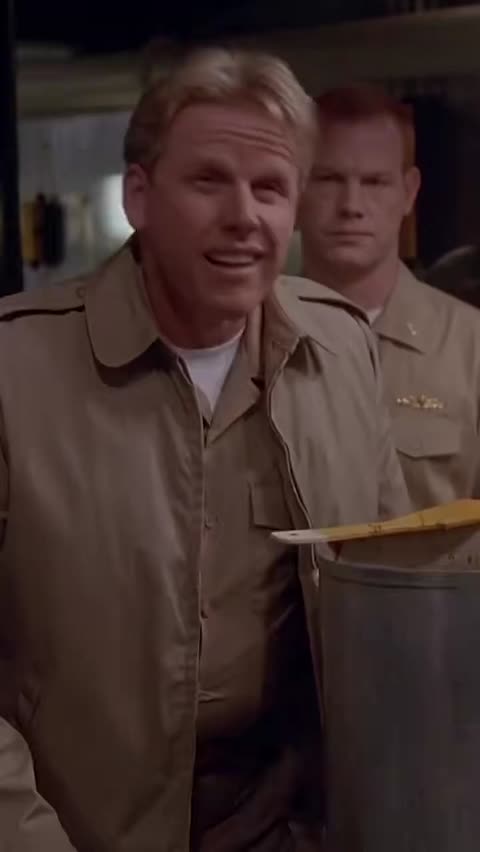
Under Siege Under Siege Under Siege is a 1992 American-French action thriller film directed by Andrew Davis and starring Steven Seagal, Tommy Lee Jones, Gary Busey, and Erika Eleniak. It was released in the United States on October 9, 1992. The film follows a chef with a special forces background who steps up to stop a catastrophe when terrorists conspire with the executive officer to hijack the USS Missouri and sell its nuclear-armed Tomahawk missiles to arms dealers. The legendary battleship USS Missouri, famous in U.S. Navy history, is about to be decommissioned. As it embarks on its final patrol across the Pacific, the ship is filled with a festive atmosphere—the old captain's birthday is approaching, a grand celebration is planned, and all the sailors have been given leave. Casey Ryback (Steven Seagal), the ship's cook and a petty officer, is busy preparing the banquet when the unpopular executive officer, Commander Krill (Gary Busey), clashes with him and locks him in a refrigerated storage room. An entertainment troupe comes aboard to perform, and as the show reaches its climax, danger quietly descends. Once the celebration begins, the visiting musicians and cooks draw weapons, massacre the sailors, and lock the survivors in the holds. They are terrorists led by two military experts, and their mission is to steal all the nuclear missiles aboard the ship. The terrorist leader, William Strannix (Tommy Lee Jones), a former CIA agent, has teamed up with Krill to obtain the launch codes for the ship's multiple nuclear-armed Tomahawk missiles. Strannix's men quickly seize control of the entire ship, and the old captain is killed. The military is utterly stunned by the terrorist attack but powerless to respond. Among those still free on the ship, besides the criminals, is only the chef Casey Ryback, who managed to escape. The terrorists initially dismiss him, but unknown to them, Ryback is a former special forces operative who earned great distinction in the Panama campaign before being demoted to cook after clashing with a superior during an operation. Skilled in martial arts and explosives, he single-handedly engages the terrorists in a life-and-death struggle, successfully foils their mad scheme, and captures them all. http://duanjufenxiang.ongugu.com/

No Time to Die No Time to Die A British and American action film from 2021 directed by Cary Joji Fukunaga. Produced by EON Productions for Metro-Goldwyn-Mayer Studios, written by Neal Purvis, Robert Wade, Cary Joji Fukunaga, and Phoebe Waller-Bridge, and directed by Cary Joji Fukunaga, it stars Daniel Craig, Rami Malek, Léa Seydoux, Lashana Lynch, Ben Whishaw, Naomie Harris, Billy Magnussen, Ana de Armas, David Dencik, Rory Kinnear, Dali Benssalah, alongside Jeffrey Wright, Christoph Waltz, and Ralph Fiennes. The film was released in the UK on September 30, 2021, in North America on October 8, and in mainland China on October 29. It is the 25th installment in the "007" series and the final outing for Daniel Craig as the sixth actor to portray 007, following Bond in retirement enjoying life in Jamaica whose peace is shattered by a plea for help from an old CIA friend, leading him to track down a mysterious villain armed with dangerous new technology in a rescue mission far more perilous than expected. In 2022, the film won the Screen Actors Guild Award for Outstanding Performance by a Stunt Ensemble in a Motion Picture at the 28th ceremony and the Best Action Movie award at the 2nd Critics' Choice Super Awards. As of 2026, the film's worldwide box office total is $774,153,007. Young Madeleine's (Coline Defaud) home is attacked, and the masked assassin Safin (Rami Malek) spares her life. Bond (Daniel Craig) and Madeleine are enjoying a new life in Italy. Bond visits the family tomb of Vesper Lynd for a final farewell but is ambushed by SPECTRE agents led by Primo (Dali Benssalah). The two escape by car. Bond believes Madeleine betrayed him, and they part ways. In London, SPECTRE strikes again, destroying a laboratory developing the deadly bioweapon "Hercules" and kidnapping its chief scientist, Valdo Obruchev (David Dencik). After the attack, Felix Leiter (Jeffrey Wright) visits Bond in Jamaica to ask for his help. Bond sails to Cuba, where he witnesses "Hercules" kill a gathering of SPECTRE agents alongside CIA agent Paloma (Ana de Armas). Bond defeats the new 00 agent Nomi (Lashana Lynch), captures Obruchev, and hands him over to Felix at sea. The rogue CIA agent Logan Ash (Billy Magnussen) betrays them, killing Felix. Bond returns to London, desperate to avenge his friend's death. Bond receives a cold reception from M (Ralph Fiennes) but is eventually allowed to meet the imprisoned Blofeld (Christoph Waltz), which leads to a brief and painful reunion with Madeleine. Bond extracts a series of shocking revelations from Blofeld before his horrific death. Armed with new information, Bond tracks Madeleine to Norway, where the two reconcile and learn from secret files collected by Madeleine's father, Mr. White, about the villain Safin and his hatred of SPECTRE. Ash attacks them, and Safin kidnaps Madeleine, taking her to his island base. M orders Bond and Nomi to launch an attack, rescue Madeleine, and kill Obruchev, Primo, and Safin. http://duanjufenxiang.ongugu.com/

Your tea room. Your tea room. The film directed by Chee Wan Chong (English title: Close Up Kopitiam) is a comedy directed by Malaysian director Chee Wan Chong, starring Lai Yu Han and Jack Lim, among others. It was released in Malaysia on January 29, 2025, with a runtime of 105 minutes and Mandarin Chinese as its spoken language. Set against the backdrop of a traditional Malaysian coffee shop (Kopitiam), the film follows Ah Biao, who inherits his mother's tea house and runs it with his wife. A conflict with a viral influencer over management style leads to online harassment and a business crisis. Through a dual-narrative structure, the film explores the clash between influencer culture in the AI era and traditional street-stall culture, blending local humor such as teasing police officers over "collecting coffee money" in everyday scenes, while portraying the warm connections of the Chinese community's stall culture in Malaysia. Director Chee Wan Chong embeds reflections on online bullying and the age of information overload, ultimately concluding with a happy ending where third-party evidence restores the truth. Singaporean actor Jack Lim also participated in the film as both an investor and a cameo performer. After its release in Malaysia, the film accumulated approximately RM12 million at the box office. Plot Summary: Ah Biao inherits the tea house (Kopitiam) run by his mother and manages it together with his wife. Business once flourished, but Ah Biao's management style and unconventional marketing strategies led to an unexpected crisis, plunging the tea house into unprecedented danger. After a conflict with a well-known influencer, the tea house becomes caught up in a media storm, causing business to plummet. http://duanjufenxiang.ongugu.com/

Invasion Machine Invasion Machine A 2026 British, Australian, New Zealand, and American action sci-fi film directed by Patrick Hughes is an action sci-fi film directed by Patrick Hughes and starring Alan Ritchson, Stephen James, Dennis Quaid, and others. The film was released in Australia on February 12, 2026, and became available online on March 6. The film tells the story of a retired soldier who joins the U.S. Army Rangers to fulfill his younger brother's last wish, and during a field training exercise, he and other trainees encounter a giant alien killing robot in the wilderness, forcing them to fight desperately for survival and find a way to warn the outside world of this unknown threat. As of March 10, 2026, the film's global box office total was $57,194. Plot Summary: A U.S. soldier (Alan Ritchson) loses his younger brother (Jai Courtney) in a failed rescue operation in Afghanistan. To fulfill his brother's last wish, he enlists in the U.S. Army Rangers. During training, the recruits who make it to the end must participate in a simulated exercise, where the instructors test their courage and willpower. But in the middle of the exercise, this group of would-be Rangers discovers a giant alien killing robot in the woods. They must find a way to survive and alert the outside world to this new threat. http://duanjufenxiang.ongugu.com/

One more mile Director: Adam Davidson Writers: T.J. Brady, John Halavin, Rashid Newson Stars: Ryan Phillippe, Emily Hoffer, Sarah Canning, Sage Linder, Beverly Elliott, More... Genre: Drama, Action, Thriller Country/Region of Production: United States Language: English Release Date: 2026-02-20 (United States) Runtime: 80 minutes Also Known As: A Mile: Chapter Two A former special forces operative, Danny, is forced to return to a remote isolated island. A ruthless and secretive organization, seeking revenge, kidnaps his daughter Alex and sets an elaborate trap, launching a relentless and brutal hunt against him with every move he makes anticipated in advance. http://duanjufenxiang.ongugu.com/

decibel decibel The Game In 2022, Korean director Hwang In-ho's film, a terrorist action movie directed by Hwang In-ho and starring Kim Rae-won, Lee Jong-suk, Jung Sang-hoon, Park Byung-eun, Lee Sang-hee, Jo Dal-hwan, Cha Eun-woo, and Lee Min-ki, was released in South Korea on November 16, 2022. The film is adapted from a short story written by Lee Jin-hoon and tells the story of two retired submarine crew members suffering from post-traumatic stress disorder who embark on a thrilling battle of wits and survival to uncover the truth behind the accident that killed half of the ship's crew. Plot Synopsis: One day, a house suddenly explodes. At that moment, former naval vice captain Kang Do-young (Kim Rae-won), who sees the news flash, receives a phone call. The bomb designer Jeon Tae-seong (Lee Jong-suk) says that the bomb will explode instantly if the noise exceeds 100 decibels, and his next target is a soccer stadium where a match is underway. To stop the ongoing bomb terror attacks in the city center, he races through various locations to find the culprit and must quickly locate the bomb designer who holds all the secrets, leading to a fierce showdown between the two. http://duanjufenxiang.ongugu.com/

The Punisher's Last Hit/Part II/Part I
American TV special directed by Reinaldo Marcus Green, 2026
The Punisher: The Last Hit is a TV special produced by Marvel Television, directed by Reinaldo Marcus Green, written by Jon Bernthal and Reinaldo Marcus Green, and starring Jon Bernthal, Deborah Ann Woll, Jason R. Moore, and Judith Wright.
Based on Marvel Comics, the film follows Frank Castle as he seeks a meaning beyond revenge, only to be pulled back into the fight by an unexpected force.
The film premiered on Disney+ on May 12, 2026.
Free movie downloads
http://duanjufenxiang.ongugu.com/

Sharing the town Director: Michael Angelo Covino Screenwriter: Michael Angelo Covino / Kyle Marvin Starring: Dakota Johnson / Adria Arjona / Kyle Marvin / Michael Angelo Covino / Simon Webster / More... Genre: Drama / Comedy / Romance Country/Region of Production: United States Language: English Release Date: 2025-05-19 (Cannes Film Festival) / 2025-08-22 (United States) Runtime: 104 minutes Also Known As: Shareville / Splitville When Ashley (Adria Arjona) suddenly asks for a divorce, heartbroken Cary (Kyle Marvin) seeks comfort at the beach house of his friends Paul (Michael Angelo Covino) and Julie (Dakota Johnson). In his eyes, this loving couple seems to have long found the secret to a lasting relationship—a mutually accepted, open marriage. However, when Cary, fresh from a breakup, unexpectedly stumbles into this "perfect set of rules," the once-stable balance begins to rapidly unravel. As jealousy, desire, and insecurity surface one by one, all four people discover that love is far more complicated than they ever imagined. http://duanjufenxiang.ongugu.com/
Tomorrow Never Dies Tomorrow Never Dies In 1997, an action film directed by Roger Spottiswoode. It is an action film directed by Roger Spottiswoode and starring Pierce Brosnan, Michelle Yeoh, Teri Hatcher, Jonathan Pryce, Ricky Jay, and others. The film was released in the UK on December 12, 1997. The film mainly tells the story of Agent 007 Bond, who is ordered to investigate media mogul Carver, discovers his plan to provoke a war, and Bond, with the help of female agent Lin Hui, destroys Carver's conspiracy. The British Navy's HMS Devonshire is sunk by an unidentified torpedo attack in Chinese territorial waters. To investigate the situation, the British Navy decides to use force and sends warships to the affected waters for retaliation. However, this is stopped by M (Judi Dench), the head of the secret intelligence service, who sends Agent 007 James Bond (Pierce Brosnan) to find out the real cause and avoid an imminent war between the two countries. As the investigation deepens, media mogul Carver (Jonathan Pryce) comes into Bond's sight. Moreover, at a dinner party hosted by Carver, Bond meets his ex-girlfriend Paris (Teri Hatcher), now Mrs. Carver. With Paris's help, Bond uses GPS to divert the already dispatched British warships off course, buying precious time for his investigation. From the device stolen from Carver, Bond discovers the exact location of the sunken warship, but at the wreck site, he is captured along with Chinese female agent Lin Hui (Michelle Yeoh). It turns out that Carver aims to gain a global media monopoly by provoking a war. After escaping, 007 decides to join forces with Lin Hui to go deep into the den and destroy Carver's conspiracy to eliminate the shadow of war. http://duanjufenxiang.ongugu.com/

Short drama: Maybach in the Fish Pond
Free download of 30,000+ short drama resources (updated daily)
http://duanjufenxiang.ongugu.com/

Never Say Never Again Never Say Never Again A thriller action film from 1983, directed by Irvin Kershner in the UK, the US, and Germany. Directed by Irvin Kershner and starring Sean Connery, Klaus Maria Brandauer, Kim Basinger, and Barbara Carrera, the film was released in the United States on October 7, 1983. The story follows the British intelligence service through a regime change, where the 007 agent is no longer favored. However, when two cruise missiles are stolen by SPECTRE, the intelligence department is at a loss, and Bond is called upon in a time of crisis to turn the tide. Agent James Bond (Sean Connery), codenamed 007, repeatedly proves his merit in battle. This time, using a series of novel and astonishing weapons, he single-handedly eliminates an entire enemy army. Thanks to Bond's outstanding performance, he earns a rare long vacation. Yet just then, SPECTRE steals two powerful missiles from the military, and British Intelligence has no choice but to recall Bond from his hot spring holiday. Through investigation, Bond discovers that the mastermind behind this scheme is the madman Maximillian Largo (Klaus Maria Brandauer), who is planning and executing a global nuclear extortion plot. Moreover, Largo has the help of the most dangerous female assassin, Fatima, and the head of SPECTRE, Blofeld, making this an exceptionally severe test for Bond. http://duanjufenxiang.ongugu.com/

Revenge Princess Scarlett Director: Hosoda Mamoru Screenwriter: Hosoda Mamoru Starring: Ashida Mana / Okada Masaki / Yamaji Kazuhiro / Emoto Tokio / Aoyagi Takayuki / more... Genre: Action / Sci-Fi / Animation / Fantasy / Adventure Country/Region of Production: Japan Language: Japanese Release Date: 2025-09-04 (Venice Film Festival) / 2025-11-21 (Japan) Runtime: 111 minutes Also Known As: Endless Scarlet / Scarlet (Hong Kong) / Scarlet: The Never-Ending Story (Taiwan) / Scarlet of Endless Hope / Scarlet / Hateshinaki Scarlet In a medieval kingdom ravaged by war, Princess Scarlet, sword in hand, embarks on a journey to avenge her father—only to end in failure. When she awakens again, she finds herself in the mysterious "Land of the Dead." There, she encounters an idealistic young man from the modern world; his kindness and compassion shake the deep-rooted hatred within her. When her father's killer reappears, Scarlet must make a choice: to cling to her obsession with revenge, or to find meaning in life beyond hatred. http://duanjufenxiang.ongugu.com/

Wild Boar Ridge Director: Kevin Lewis Starring: Hero Fernandez, Renee Cooley, Shane West, Isabella Synopsis: Kelly is fascinated by the local legend of the Pig Hill boar men, terrifying creatures that breed and wreak havoc. With the tenth woman missing, Kelly can't help but think there may be more secrets behind these stories. Kelly is fascinated by the local legend of the Pig Hill boar men, terrifying creatures that breed and wreak havoc. With the tenth woman missing, Kelly can't help but think there may be more secrets behind these stories. http://duanjufenxiang.ongugu.com/

Licence to Kill Licence to Kill The 1989 film directed by John Glen is an action film directed by John Glen, starring Timothy Dalton, Carey Lowell, Robert Davi, and Talisa Soto, released in the UK on June 13, 1989. It is the 16th installment of the 007 series, telling the story of British agent Bond's friend Leiter being framed by drug lord Sanchez, and Bond vowing to make Sanchez pay and launching a revenge mission. Plot Summary: After learning that drug trafficking kingpin Sanchez is near the Bahamas in Latin America, British spy James Bond rushes there with his friends Leiter and Sharkey. It happens to be Leiter's wedding day, but despite this, everyone spares no effort to try to arrest Sanchez. Unfortunately, someone inside the drug enforcement agency has been bought off. Sanchez not only escapes but also takes revenge on the Leiter couple, throwing Leiter into a shark tank and raping and murdering his new wife. Leiter survives but is left crippled. Facing his friend's tragic state, Bond is filled with rage and decides to avenge his friend no matter what. Bond's superior M warns him, but Bond insists on continuing the pursuit, so he is dismissed from his post and has his license to kill revoked. Bond resolves to act independently, carrying out this unauthorized revenge mission. At the largest shark facility in the area, Bond finds clues related to Leiter's attack and believes the owner, Krest, is connected to the incident. So Bond decides to investigate starting with Krest. Soon, he discovers that the real culprit behind everything is Krest's boss, Sanchez. During the investigation, Sanchez's lover Lupe gradually falls for Bond and helps him obtain valuable information. Sanchez owns a bank and a nightclub in Panama City, where he is meeting with a group of Eastern drug traffickers to collaborate on a major deal. Just as Bond is looking for an opportunity to assassinate Sanchez, agents from the Hong Kong Narcotics Bureau capture him and take this "fugitive spy" to a secret location, handing him over to British intelligence. The secret location is subsequently blown up by Sanchez's armed men, and while clearing the rubble, they discover Bond, who has miraculously survived. After his failed assassination attempt, Bond cleverly uses a divide-and-conquer strategy to break apart Sanchez's organization from within, but then uncovers a missile conspiracy. Bond gains Sanchez's trust, skillfully exploits the internal relationships among the drug traffickers to infiltrate Sanchez's organization, and is later taken to an underground drug factory. After being recognized by one of Sanchez's men, Bond falls into danger but is saved with the help of female agent Pam Bouvier. In the end, Bond uses Leiter's lighter to set fire to Sanchez's gasoline-soaked clothes, avenging the Leiters. After eliminating the world's largest drug cartel, Bond returns to MI6. http://duanjufenxiang.ongugu.com/

The Queen's Secret Agent 007 The Queen's Secret Agent 007 A 1969 British film directed by Peter R. Hunt, this is an action film released by Warner Home Video. It is the sixth entry in the 007 series, directed by Peter R. Hunt and starring George Lazenby and Diana Rigg. The film was released in the UK on December 18, 1969. The story follows Bond as he is ordered to conduct a secret investigation at a sanatorium atop a Swiss snowy peak, where he destroys an old rival Blofeld's plot to subvert the world. After British agent James Bond completes one arduous mission after another, only the whereabouts of SPECTRE leader Blofeld and the "Crazy House Plan" remain unresolved. His superior believes Bond is not capable of completing this task and intends to assign it to someone else. Despite Bond's repeated assurances, his superior remains adamant, leaving Bond no choice but to conduct his own secret investigation. On the beach, James Bond rescues wealthy heiress Tracy from a suicide attempt and helps her out of a jam at the gambling table. Tracy's father Draco is not only a successful tycoon but also the head of a European crime syndicate with astonishing wealth. He dotes on his daughter and believes she needs a man who can command and protect her, making the British gentleman Bond, with his special background, the ideal choice. Tracy's father, the magnanimous crime boss, hopes James Bond will marry his daughter and promises a reward of £1 million, which James Bond politely declines. Seeing that Bond is unmoved, this shrewd businessman offers a condition Bond absolutely cannot refuse: if Bond gets engaged to Tracy, he will reveal the whereabouts of Blofeld, the old adversary Bond has been tracking for two years without results. At this time, Bond is being reprimanded by M over the Blofeld matter, so he accepts the deal. Tracy discovers the arrangement between her father and Bond and threatens her father to reveal the information Bond needs immediately, or she will leave. Under pressure from his beloved daughter, Draco unconditionally tells Bond Blofeld's secret. But after obtaining the information, Bond does not leave immediately; he spends a wonderful time with Tracy before heading to Switzerland to investigate. Bond's old adversary Blofeld has established a sanatorium in the Swiss mountains. On the surface, it appears to be an ordinary upscale resort with beautiful scenery and first-class service, but in reality, it is a key base for Blofeld's plan to control the world. Blofeld plots an ambitious scheme for global domination: injecting the "Omega" virus into female patients and dispatching 12 beauties of different nationalities to unknowingly carry the virus to different corners of the world, attempting to seize world sovereignty. Blofeld's scheme draws the attention of British intelligence, and 007 is ordered to investigate the case. Bond poses as Sir Hillary Bray, an expert in genealogy and heraldry, to infiltrate the sanatorium in the snow fortress. Although 007 uncovers Blofeld's plot, he finds himself trapped atop the snowy peak with no way to escape. At this moment, Tracy, who has come to the mountains for a holiday, spots Bond. With Tracy's help, James Bond escapes from danger. During the escape, Bond gradually realizes that Tracy is the woman he truly loves, and the two fall in love. After escaping, Bond exposes Blofeld's scheme, timely blows up the laboratory, and saves the world. After the mission, Bond finds the true love of his life, and he and Tracy hold a grand wedding. However, shortly after the wedding, they become the target of Blofeld's gang's revenge. http://duanjufenxiang.ongugu.com/

Requesting rescue. Requesting rescue. The American horror-thriller film "Send Help", directed by Sam Raimi in 2026, is produced by 20th Century Studios. Directed by Sam Raimi and co-written by Damian Shannon and Mark Swift, it stars Rachel McAdams and Dylan O'Brien in lead roles, with Dennis Haysbert and Wu Yugang in supporting roles. The film was released in South Korea on January 28, 2026, and in North America on January 30, 2026. The story follows the only two survivors of a plane crash, a pair of coworkers, who are stranded on a deserted island. They must overcome their past grudges and work together to survive, in a battle of will and wits. The film topped the North American box office with a $20 million opening weekend, with a production budget of approximately $40 million. It holds an MTC score of 76, a Rotten Tomatoes freshness rating of 93%, and a CinemaScore of B+. As of March 30, 2026, the film has grossed over $94.0066 million worldwide. Linda Liddle (played by Rachel McAdams) is an ordinary office worker. Her excellent work goes unrecognized until a scheming colleague, Donovan (played by Xavier Samuel), takes credit for her achievements. She is ostracized by her coworkers, while her new boss, Bradley Preston (played by Dylan O'Brien), treats her with arrogance and tells Linda that the promotion she dreamed of has instead been given to his old buddy Donovan. However, as compensation, he invites Linda to join him and several other executives on a private plane trip to Thailand for business. But misfortune comes all at once. The plane crashes, leaving Linda and the severely injured Bradley as the sole survivors, stranded on a remote, uninhabited island. Bradley, barely able to walk due to his injured leg, is completely incapable of handling the current predicament. Linda, however, is a different story—she clearly has extensive experience in survival skills and handles various situations with ease. She builds a sturdy shelter from branches, starts fires for cooking, and prepares fish she catches herself. She even goes hunting, engaging in a life-or-death struggle with a fierce wild boar. Bradley initially dismisses Linda's efforts, but gradually the two begin to reconcile, and Bradley starts to help. However, conflict arises again when they disagree on what to do next. Linda wants to stay on the island and wait for rescue, while Bradley insists they should build a raft to try and attract the attention of passing ships. http://duanjufenxiang.ongugu.com/

New Year's Fear Night
A 2025 American film directed by Eric Huskisson and P.J. Starks
New Year's Fear Night is an American comedy horror film directed by Eric Huskisson and P.J. Starks, starring Dave Sheridan, Felissa Rose, Hannah Fairman, Ronny Jonah, and Jeffrey Reddick, released in 2025.
The film follows three best friends who reluctantly prepare for Hooper Industries' annual New Year's Eve party, but when a killer sets their sights on them, the party turns into a deadly trap.
Free movie downloads
http://duanjufenxiang.ongugu.com/

Die Another Day Die Another Day In 2002, Lee Tamahori directed the spy film *Die Another Day*. It is an action film directed by Lee Tamahori, starring Pierce Brosnan, Halle Berry, Rosamund Pike, Toby Stephens, and others. It is the 20th installment in the James Bond series and was released in the UK on November 18, 2002. The film follows Bond as he tracks a renegade from MI6 from North Korea to Cuba, thwarting a catastrophic conspiracy orchestrated by a North Korean野心家 (ambitious figure). **Plot Summary** James Bond (Pierce Brosnan) is dispatched to Korea to stop an illegal arms deal between an African diamond smuggler and North Korean official Colonel Moon (Lee Wi-yin). Colonel Moon, who hides his illegal arms trading from his father, General Moon, is approached by Bond's team, who successfully land in North Korea. They send a false signal to lure Moon's guest, Van Bierk, and take his place to complete the transaction at Moon's base. However, during the deal, Colonel Moon receives a message from a traitor inside MI6, exposing Bond, who nearly gets killed. Ultimately, Bond uses his unique skills to complete the mission, and Colonel Moon falls off a waterfall, presumed dead. However, Bond is arrested by General Moon (played by Tsang Kong), who arrives on the scene, and is thrown into prison, where he endures severe torture, while the British government denies any knowledge of him. When MI6 learns Bond is alive, they demand General Moon release him, paying a heavy price by exchanging Zhao (Yoon Sung-sik), a North Korean spy who has killed multiple Western agents, for Bond. Yet, upon his release, Bond is suspended by M (Judi Dench) because higher-ups suspect he leaked information while imprisoned. Isolated and without support, Bond jumps off a warship and sets off alone to track down Zhao. As M is about to give up on Bond as an agent, Bond works tirelessly, traveling the world to find those who betrayed him. On the other side of the globe, an orphan becomes a billionaire, rapidly rising to fame. His name is Gustav Graves (Toby Stephens), and he operates a diamond mine at his base "Ice Palace" in Iceland. Graves also has a keen interest in environmental and space technology, the latter leading him to create Icarus, a second sun in the sky that can illuminate the far side of the Earth. But things are not as simple as they appear, and the world is once again plunged into a crisis over control of it. In Cuba, Bond encounters NSA agent Jinx (Halle Berry), and after a night together, they discover a transformed Zhao at a gene therapy clinic. Though Zhao escapes, Bond finds five diamonds engraved with the mark of British billionaire Gustav Graves. Bond meets Graves at a fencing club in London, wagers a diamond, and duels him. Defeated, Graves not only gives Bond a check but also invites him to Iceland for a high-tech showcase celebration. In an abandoned London Underground station, M reinstates Bond as an agent, informing him that Miranda Frost (Rosamund Pike) near Graves is an MI6 mole, though she has found nothing. Bond arrives in Iceland and reunites with Jinx. That night, Graves unveils the new satellite "Icarus," which can concentrate solar energy to provide year-round sunlight for crop cultivation. At midnight, Jinx and Bond infiltrate the control center, discovering Zhao's whereabouts and learning that Colonel Moon, who fell off the waterfall years ago, is now Graves. Graves' true goal is to use "Icarus" to clear the minefields between North and South Korea, allowing North Korean forces to invade the South and achieve unification, while any Western nation attempting to attack North Korea would also be doomed. To keep the world from war, Bond and Jinx join forces to eliminate the deranged Graves. http://duanjufenxiang.ongugu.com/

Mountain Witch Mountain Witch A 2025 Indonesian horror film written and directed by Jose Poernomo. It is a 2025 Indonesian horror film written and directed by Jose Poernomo, starring Davina Karamoy, Sara Wijayanto, Pratito Wibowo, and others. It was released in Indonesia on November 6, 2025, with a runtime of 107 minutes. The story follows high school girl Avindya, who, 24 hours after her boyfriend goes missing, invites her friends Agnes and Mojo to search for him on Mount Merbabu. There, they discover that the mountain's guardian—the Mountain Witch—has been brutally killed by black magic. After joining forces with Yoga and Disca, who have also lost loved ones on the mountain, they search for the identity of the new Mountain Witch to find the missing people. According to local legend, a mountain without a Mountain Witch is forbidden ground, where demons and spirits will terrorize intruders. Plot Synopsis: After receiving no word from her mountain-climbing boyfriend for a full 24 hours, high school girl Avindya makes up her mind and invites her two friends, Agnes and Mojo, to join her on a search for him at Mount Merbabu. Upon arriving, they discover that the mountain's guardian—or "Mountain Witch"—has been brutally killed by black magic. After meeting up with two other companions who have also lost loved ones on the mountain—Yoga and Disca—they agree to find out who the new Mountain Witch is in order to recover their missing friends. According to local legend, a mountain without a Mountain Witch becomes a forbidden land full of mysteries, where all demons and spirits will have their way, wantonly terrorizing those who dare to trespass. Can they successfully find the successor to the mountain's guardian—the Mountain Witch? http://duanjufenxiang.ongugu.com/

She walks in the dark. A 2025 Spanish film directed by Agustín Díaz Yanes, "Un Fantasma en la Batalla" is a drama, historical, and thriller film written and directed by Spanish filmmaker Agustín Díaz Yanes himself, starring Susana Abaitua Gómez, Raúl Arévalo, Iñaki Balboa, Ilaria Elías, Andrés Herderudix, and others. Produced by Basoilarraren Filmak and TriPictures, the film is set against a Spanish production backdrop, filmed in Spanish, Basque, and French, with a runtime of 108 minutes. The film is scheduled to premiere at the San Sebastián Film Festival on September 23, 2025, hit Spanish theaters on October 3 of the same year, and debut on streaming platforms on October 17. The film is inspired by one of the most significant undercover operations against the ETA organization, which became a turning point in Spain's counterterrorism efforts. Set from the 1990s to the early 2000s, it tells the story of Amaia (played by Susana Abaitua), a young Civil Guard officer who infiltrates the terrorist organization for over a decade, searching for secret weapons caches ("zulos") hidden in southern France. The film is inspired by one of the most significant undercover operations against the ETA organization, which became a turning point in Spain's counterterrorism efforts. Set from the 1990s to the early 2000s, it tells the story of Amaia (played by Susana Abaitua), a young Civil Guard officer who infiltrates the terrorist organization for over a decade, searching for secret weapons caches ("zulos") hidden in southern France. Amaia, portrayed by Susana Abaitua Gómez, is a young Civil Guard officer tasked with infiltrating the terrorist organization ETA for over a decade as an undercover agent, with the core mission of locating and identifying the secret weapons caches "zulos" hidden in southern France. Arrieta is played by Raúl Arévalo. Bolinaga, played by Iñaki Balboa, is an ETA member involved in ceasefire-related events. Begoña is played by Ilaria Elías. Teniente Coronel Castro is played by Andrés Herderudix. Anboto is played by Ariadna Gil. http://duanjufenxiang.ongugu.com/

Spy Killing Storm Spy Killing Storm A 2026 Spanish thriller directed by Dani de la Torre (Spanish: Zeta) is a Spanish thriller film set to premiere on Prime Video in 2026, directed by Dani de la Torre and starring Mario Casas, Maribel Verdú, and others. The film follows four former Spanish agents who are assassinated around the world, all of whom were linked to a secret "Operation Ciénaga" in Colombia decades earlier. Zeta, Spain's top agent, is tasked with tracking down and protecting the sole survivor, and teams up with Colombian agent Alpha, who seems to know more about the operation, to uncover the secrets of the past. Synopsis Four former Spanish agents are assassinated simultaneously at different locations around the world. Spain's National Intelligence Center discovers that decades earlier, they all participated in the secret Operation Ciénaga in Colombia. Zeta (Mario Casas), the CNI's most outstanding agent, must track down and protect the sole survivor, making this his most dangerous global mission yet. Colombian top agent Alpha (Maribel Verdú) will work alongside Zeta, and she seems to know more about the secrets behind Operation Ciénaga than he does. http://duanjufenxiang.ongugu.com/

Mentor Region: Thailand Year: 2025 Language: Thai In a well-known cram school, a terrifying rumor circulates: if you walk up to the sealed-off fourth floor late at night, fill out the registration form on the desk, and write down your wish to pass the exam, no matter how difficult the test or department, you will be admitted. Gifted student Belle and her friends go to test their courage, and their wishes miraculously come true one by one—but accompanied by a string of bizarre deaths. Carrying her mother's expectations of medical school, Belle also leaves her name on the list, and from then on, strange occurrences plague her; her sister gradually descends into mental breakdown, and her younger brother Beth steps up to save her, determined to rewrite fate in his own name. As the truth slowly unravels, they discover that the secret buried on the fourth floor is tightly connected to a horrifying past between a teacher and students... When the desire to pass exams relies on supernatural forces, and that success comes at the cost of life—is it graduation, or death? Can they survive within this insane education system? http://duanjufenxiang.ongugu.com/

Garfield 2/Garfield 1
American and British film directed by Tim Hill in 2006
"Garfield: A Tail of Two Kitties" is a comedy film directed by Tim Hill, featuring the voice talents of Bill Murray and Tim Curry, and starring Breckin Meyer, Jennifer Love Hewitt, and Billy Connolly. The film follows Garfield and a noble cat prince who, through a twist of fate, switch identities, leading to a series of hilarious misadventures.

The Red Envelope
A 2025 Thai film directed by Chayanop Boonprakob
*The Red Envelope* (Thai: ซองแดงแต่งผี) is a Thai comedy, action, and mystery film directed by Chayanop Boonprakob, written by Chantavit Dhanasevi, Thesadate Chalornditthichai, and others, and starring Putthipong Assaratanakul, Krit Amnuaydechkorn, and Yaratcha Pumipanpak. It is a remake of the Taiwanese film *Marry My Dead Body*. The film was released in Thailand on March 20, 2025, in Taiwan and Hong Kong in May of the same year, and arrived on Netflix on July 24.
The film tells the story of police officer Menn (played by Putthipong Assaratanakul), who accidentally picks up a ghost wedding red envelope and is forced to marry the gay ghost Titi (played by Krit Amnuaydechkorn). The two are in pursuit...

“The Flu”
A 2013 South Korean film starring Jang Hyuk and Soo Ae.
“The Flu” is a South Korean drama film written and directed by Kim Sung-su, starring Jang Hyuk, Soo Ae, and others. The film was released in South Korea on August 15, 2013.
The film is set during a deadly influenza outbreak, following firefighter “Kang Ji-gu” and female doctor “Kim In-hae” as they embark on a journey to track down the virus’s host, encountering a series of events along the way.
In 2013, the film received a nomination for Best Supporting Actress at the 50th Grand Bell Awards in South Korea. As of April 10, 2024, the film has grossed a total of $19,775,853 worldwide.
Free movie downloads
http://duanjufenxiang.ongugu.com/
The Magnificent Seven The Magnificent Seven The Magnificent Seven Seven Samurai In 2016, Anthony Fuqua directed an American film. It is a Western action film produced by Metro-Goldwyn-Mayer. Directed by Anthony Fuqua, it stars Chris Pratt, Matt Bomer, Vincent D'Onofrio, Denzel Washington, Ethan Hawke, Cam Gigandet, and Lee Byung-hun. The film was released in South Korea on September 14, 2016. It is a remake of the 1960 film of the same name, adapted from a film by Japanese director Akira Kurosawa. It tells the story of seven warriors who protect villagers from bandit attacks in a small Mexican village after the American Civil War. In the California mining town of Rose Creek, Emma's (Haley Bennett) husband Matthew (Matt Bomer) is gunned down by the corrupt industrialist Bogue (Peter Sarsgaard), a villain who will not hesitate to kill anyone standing in his way of taking over the land. He threatens the entire town: either agree to his plans, or his private militia will come back within three weeks to retaliate against the residents. Most of the townspeople are timid and want to flee, leaving it all behind. But Emma is furious and wants to stay and fight, so she hires the bounty hunter Sam (Denzel Washington). She has little money to pay him, but she manages to appeal to his sense of justice and honor. So Sam slowly assembles a like-minded crew—outlaws or outcasts living on the fringes of society who know this defense of the town could be tantamount to suicide, but for them it may also be one last chance at redemption for their souls. Besides the old gambler and killer Josh Faraday (Chris Pratt), the crew includes former Southern sharpshooter Goodnight Robicheaux (Ethan Hawke), who has a complicated history with Sam. Soon, a Mexican outlaw Vasquez (Manuel Garcia-Rulfo), an Asian assassin Billy Rocks (Lee Byung-hun), a somewhat crazy, loud-mouthed, bearded tracker Jack Horne (Vincent D'Onofrio), and Red Harvest (Martin Sensmeier), a Comanche warrior exiled from his tribe, join them one by one. As the group, along with Emma, resists the corrupt sheriff colluding with Bogue, the greedy land magnate begins to take notice. Sam and his companions use every method to train the few villagers who remain, with no spare weapons and little time left. Soon Bogue arrives with his army to attack the town, triggering the final battle. http://duanjufenxiang.ongugu.com/

Omniscient Reader: The Prophecy
Omniscient Reader: The Prophecy (Korean: 전지적 독자 시점) is a 2025 South Korean fantasy action film adapted from the web novel of the same name. Directed by Kim Byung-woo, the director of The Terror Live, the film stars Lee Min-ho, Ahn Hyo-seop, Chae Soo-bin, Shin Seung-ho, Nana, and Jisoo. The story follows Kim Dok-ja, the only reader of a novel that was serialized for over a decade and suddenly became reality on the day it concluded, as he fights to survive in a collapsing world alongside Yoo Joong-hyuk, the novel's protagonist, and their other companions.
Free movie downloads
http://duanjufenxiang.ongugu.com/

Dads Director: Borja Cobeaga Writer: Borja Cobeaga / Valentina Viso Starring: Juan Diego Botto / Quim Gutiérrez / Ramón Barea / Sofía Otero / Laura Weissmahr / More... Genre: Comedy Country/Region of Production: Spain Language: Spanish Release Date: 2025-03-21 (Spain) Runtime: 88 minutes Also Known As: Breaking Walls In the 1980s, in a working-class suburb of Bilbao, a children's rhythmic gymnastics team is preparing to compete in an upcoming championship in Berlin. With the mothers unable to accompany their daughters, the task falls to the fathers. http://duanjufenxiang.ongugu.com/

Casino Royale Casino Royale A 2006 British, American, and German co-production, this action thriller directed by Martin Campbell is an action thriller written by Neal Purvis, Robert Wade, and Paul Haggis, and starring Daniel Craig, Eva Green, Mads Mikkelsen, Caterina Murino, and others. It premiered in London, England on November 14, 2006, and was released in the United States on November 17, 2006. The film is the 21st installment in the "007" series, based on Ian Fleming's first Bond novel published in 1953. It tells the story of a novice James Bond who, after completing two competent assassination missions, is promoted to 007 agent and begins his first mission as a 007 agent at the Casino Royale in Montenegro. As of May 16, 2024, the film has grossed $616,505,162 worldwide. In 2007, the film was nominated for the Alexander Korda Award for Best British Film at the 60th British Academy Film Awards. Plot Summary Before James Bond (Daniel Craig) earned his license to kill, he had been carrying out many dangerous missions. It wasn't until after two near-perfect assassination missions that James Bond was promoted to "00" level agent, the highest rank. Bond's first mission after receiving the "007" number was to head to Madagascar. However, the inexperienced Bond attacked an embassy, putting MI6 in a difficult position, and Bond was ordered by his superior "M" to stop working. But Bond continued to track down other terrorists and arrived in the Bahamas, where he encountered Dimitrios and his girlfriend Solange (Caterina Murino). Through his investigation, Bond learned that Dimitrios was in close contact with Le Chiffre (Mads Mikkelsen), who was the money launderer behind the world's major terrorist organizations. Bond managed to thwart Le Chiffre's terrorist attack investment plan, forcing Le Chiffre to hold a high-stakes card game at a royal casino in Montenegro, Yugoslavia, hoping to use his winnings to cover his losses. To stop Le Chiffre and completely dismantle his network, MI6 assigned Bond to play cards against Le Chiffre at the Casino Royale and defeat him. After receiving a large sum of government money as a stake, "M" placed Vesper Lynd (Eva Green), an agent from the Treasury, by Bond's side to ensure the safety of the government funds. At first, Vesper didn't trust Bond; but after the two survived a deadly terrorist attack, Vesper gradually changed her view of Bond. In Montenegro, Bond contacted Mathis, a veteran MI6 agent stationed there, and Felix Leiter, a newly acquainted American agent. Together, they joined forces to take on Le Chiffre. Behind the marathon gambling lay cunning deception and bloody violence, and as the stakes rose, the struggle between good and evil gradually reached a new climax. http://duanjufenxiang.ongugu.com/

Delicious Countdown Hey! Mun-hee! The Seamless Her Director: Kim Tae-yong Screenwriter: Kim Tae-yong Cast: Choi Woo-shik / Jang Hye-jin / Kong Seung-yeon Genre: Drama Country/Region of Production: South Korea Language: Korean Release Date: 2026-02-11 (South Korea) Runtime: 105 minutes Also Known As: The number of times you can eat your mother's cooking The premise is quite interesting—a "countdown" that appears whenever you eat food prepared by your mother, starting off strange and turning into unease after a dream about your late father. The girlfriend's desire for "a family" contrasts with the male lead's "running away from family" after an accident. But the latter half is too clichéd, with one terminal illness after another. Using Grandma Mun-hee's films as an example, the best ones balance humor with tears, while the more mediocre ones rely on that formulaic tearjerker approach. http://duanjufenxiang.ongugu.com/

Border War 2
A 2026 Indian film directed by Anurag Singh
*Border War 2* is a 2026 film directed by Indian filmmaker Anurag Singh. The movie's international title is *Border 2*, and it is scheduled for release on January 23, 2026.
Free movie downloads
http://duanjufenxiang.ongugu.com/

The Living Daylights The Living Daylights The 1987 James Bond film directed by John Glen is an action film directed by John Glen, starring Timothy Dalton, Maryam d'Abo, Jeroen Krabbé, and others. It was released in the United Kingdom on June 30, 1987. The film tells the story of James Bond escorting Soviet General Koskov, a defector, to Western Europe, where he discovers that Koskov is using the defection as a cover to secretly carry out a plot to destabilize the high commands of both Britain and the Soviet Union. Bond turns the tables on him and captures Koskov and his accomplices in one fell swoop. Synopsis: The East and West are in a precarious standoff. A British intelligence agent is assassinated during exercises in Gibraltar. Soviet intelligence chief General Koskov (played by Jeroen Krabbé) defects to Britain and specifically requests that Agent 007, James Bond (played by Timothy Dalton), be assigned to protect him. Bond manages to bring Koskov back to Britain after wounding the female cellist Kara Milovy (played by Maryam d'Abo). But things are not that simple. Bond suspects that some individuals within the KGB are orchestrating a series of conspiracies for their own gain. Koskov pretends to "defect" to the West and reveals that the KGB is planning an operation codenamed "Soviet Spies" aimed at eliminating the 00-section agents, with 007's name prominently on the list. http://duanjufenxiang.ongugu.com/

Antidote Director: Nancy Liopardi Screenwriter: Jonathan Bernstein / James Greer Starring: Samantha Cochrane / David Dastmalchian / Ashley Greene / Sydney Taylor / Tyler Lawrence Gray / Alex Veadov / Marisa Echeverria / Bonnie Levine / Dylan Flaschner / Emma Hoover / Mason Miller / Ryan March / Kelly Cole / Felicia Withers / Elle Haymond / Kyle O'Gorman / Joshua James Benard / Andre Gower / Scott Dean / Sara Trombly Genre: Thriller / Horror Country/Region of Production: United States Language: English Release Date: March 20, 2026 (United States) Runtime: 91 minutes The story revolves around Allie Braun of the Cochrane family. She is a 16-year-old orphan suffering from a mysterious illness. Later, she discovers that her billionaire biotech parents—Dustmarchian and Green—are using her blood for illicit purposes. http://duanjufenxiang.ongugu.com/

You Only Live Twice You Only Live Twice A 1967 British film directed by Lewis Gilbert is an action film directed by Lewis Gilbert, starring Sean Connery, Mie Hama, Akiko Wakabayashi, and Tetsuro Tamba, among others. The film was released in the United Kingdom on June 12, 1967. The film mainly tells the story of Agent 007, after faking his death in Hong Kong, traveling to Japan to investigate unidentified flying objects on behalf of the United States. An American spacecraft is attacked by an unidentified flying object, and the U.S. suspects it is a Soviet plot aimed at dominating space. The U.S. detects that the unidentified flying object's landing site is in Japan, so the British military sends 007 (played by Sean Connery) to Japan to investigate the matter on behalf of the U.S. Due to 007's special identity, entering Japan directly would easily alert the enemy. To cover his tracks, 007 first fakes his death in Hong Kong, then enters Japan with a new identity, and teams up with two Japanese female agents, Aki (played by Akiko Wakabayashi) and Kissy (played by Mie Hama). On the other hand, a Soviet spacecraft is also attacked, and the Soviet side concludes that this is an American retaliatory action, and a war between the two superpowers is on the verge of breaking out. After an investigation, 007 discovers that the conspirators are neither the Soviet Union nor Japan, but a private unit affiliated with a Japanese chemical company. With the help of the Japanese intelligence agency, James Bond disguises himself as a Japanese fisherman and sneaks onto the island. Beneath the island's volcano hides a secret launch base, whose leader is 007's arch-enemy: Blofeld, the head of SPECTRE (played by Donald Pleasence). Just seconds before another American spacecraft is attacked, 007 destroys SPECTRE's space base. http://duanjufenxiang.ongugu.com/

Starship Troopers Starship Troopers Starship Troopers District 9 An American science fiction film directed by Paul Verhoeven in 1997, released by TriStar Pictures, directed by Paul Verhoeven, written by Edward Neumeier and Robert A. Heinlein, and starring Casper Van Dien, Dina Meyer, and Denise Richards. The film was released in the United States on November 7, 1997 [6]. The production budget was approximately $100 million. The film is adapted from a science fiction novel published in 1959, depicting a future world where humanity is invaded by alien bug-like creatures and engages in battle against them. Humans capture the leader of the bugs for research, hoping to deliver a decisive blow. The film contains numerous battle sequences and blends elements of war films and monster movies. In 1998, the film received a nomination for Best Visual Effects at the 70th Academy Awards. As of April 21, 2024, the film has grossed $121,214,377 worldwide. The film holds a rating of 8.0 on Douban. In March 2025, it was confirmed that the film would be remade under the direction of director Neill Blomkamp. http://duanjufenxiang.ongugu.com/

The CEO brings his cute kids to work
Free download of 30,000+ short drama resources (updated daily)
http://duanjufenxiang.ongugu.com/

Dutch Dutch A 2024 film directed by Andre Gaines, this drama was released in 2025 and stars Andre Holland, Kate Mara, and Zazie Beetz. The film follows a successful Black businessman named Clay who encounters a mysterious white woman, Lula, on the subway, leading the two into a sexualized cat-and-mouse game that ultimately ends in violence, exploring themes of identity crisis and marital issues. The film tells the story of a wealthy Black man and a charming white woman who clash in a sexualized game of cat and mouse, culminating in a violent conclusion. The film is adapted from a play by writer and poet Amiri Baraka. The story centers on Clay (played by Andre Holland), a successful Black businessman who meets a mysterious white woman named Lula (played by Kate Mara) on the subway, and their interactions lead to a violent outcome. http://duanjufenxiang.ongugu.com/

Goddess Advent Prequel + Sequel The Goddess Descends: Part Two Goddess Advent Before High School Debut Goddess Arrival: Before College Debut Goddess Coming After Proposal Japan 2025 movie starring Koki, is a Japanese romantic comedy directed by Hoshinokazunari, starring Koki, Keisuke Watanabe, and Tsunaga Kei, and will be released in Japan on May 1, 2025. The film is adapted from the Korean webtoon of the same name, with original Japanese plot elements added, and its first part premiered in March 2025. The story follows high school student Rina Tanigawa, who, bullied for her plain appearance, transforms her life through makeup and becomes a "goddess." After transferring schools, her bare-faced secret is seen through by classmate Shun Kanda, sparking a love triangle with Shun Kanda and Yu Igarashi, chronicling her romance and growth over nine years. This work is adapted from the Korean webtoon of the same name, incorporating original Japanese content, and tells the story of protagonist Rina Tanigawa (Koki), who restarts her life through makeup, from high school student to adulthood, over nine years of "love" and "dreams." The film is split into a first part (released March 20, 2025) and a second part (released May 1, 2025). It depicts protagonist Rina Tanigawa, bullied at school for her ordinary looks, who works hard to learn makeup techniques, completing her transformation from "ugly duckling" to "goddess." After transferring, she begins a brilliant new life, but when classmate Shun Kanda accidentally sees through her no-makeup secret, it triggers a romantic triangle with Shun Kanda and Yu Igarashi. http://duanjufenxiang.ongugu.com/
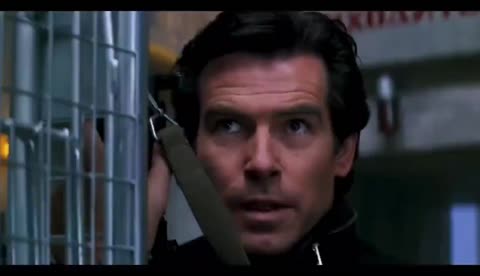
GoldenEye
A 1995 film directed by Martin Campbell
GoldenEye is an action film directed by Martin Campbell and starring Pierce Brosnan, Sean Bean, Izabella Scorupco, Famke Janssen, and Judi Dench. The film tells the story of Bond recovering the GoldenEye, a weapons system stolen by a renegade Soviet officer, and confronting his former ally along the way. The film was released in 1995.
Free movie downloads
http://duanjufenxiang.ongugu.com/

For Your Eyes Only For Your Eyes Only Directed by John Glen and starring Roger Moore, Carole Bouquet, and others, this action film is the twelfth installment of the 007 series, released in the United States on June 26, 1981. The film tells the story of James Bond and Melina working together to retrieve a transmitter from a sunken ship, which they must recover or destroy before the Soviets get their hands on it. A British spy ship explodes in Greece, carrying a transmitter capable of disabling the entire Polaris missile system. Mr. Havelock is killed while searching for the device, and his daughter Melina (played by Carole Bouquet) seeks revenge. 007 agent James Bond (played by Roger Moore) persuades Melina to join him in retrieving the transmitter from the sunken ship, but they are captured upon returning from underwater. The mastermind behind the plot quietly appears, and buyers from hostile forces also track them down. After escaping, Bond follows clues and discovers the transmitter has been taken to a monastery atop a solitary mountain. After enduring numerous dangers, Bond finally throws the transmitter off the cliff, destroying it. http://duanjufenxiang.ongugu.com/
One Hit Part 1 / One Hit 2: Urban Warfare
"One Hit 2: Urban Warfare" is a 2024 British action film directed by James Nunn and starring Scott Adkins and Michael Jai White. It is the sequel to the 2021 film "Confinement: The Jailbreak Operation." Continuing the story of its predecessor, the film follows Navy SEAL Jack Harris as he escorts terror suspect Amin Mansour to Washington, D.C., for interrogation after an attack at a black site in Poland, only to be ambushed by mercenaries en route and uncover a conspiracy.
The film employs a pseudo-one-shot filming technique, with the primary setting at London Stansted Airport, showcasing tactical confrontation in a modern airport through intricate spatial choreography. It maintains the immersive real-time narrative experience of the previous film, blending high-octane action with the tense pace of unraveling a conspiracy.
Free movie downloads
http://duanjufenxiang.ongugu.com

Moonraker Moonraker The 1979 film directed by Lewis Gilbert is an action film starring Roger Moore, Lois Chiles, and Michael Lonsdale, directed by Lewis Gilbert. The story follows a US space shuttle bound for Britain that goes missing mid-flight, prompting 007 to investigate and discover that an ambitious villain is manufacturing nerve gas and plotting to use a space station to release it and take over the world. The British space shuttle Moonraker, being transported by the US, is hijacked en route, with no trace of the shuttle's wreckage found, and the Boeing 747 carrying it is reduced to ashes. This immediately raises alarm in both governments, with the British suspecting that an illegal organization has seized the shuttle. Bond, who is far away in South Africa, is recalled to investigate, but is attacked on the plane and thrown out by Jaws, who has steel teeth. Fortunately, Bond manages to steal the pilot's parachute mid-air and lands safely, then rushes to MI6 headquarters in London to learn about the hijacking. M, Q, and Bond all agree that the investigation should begin with Drax Industries, the company that built the shuttle. Drax Industries' owner, Hugo Drax, is very cold toward Bond. Bond later encounters female astronaut Goodhead and enters the centrifuge chamber to experience the effects of extreme G-forces. Drax's men take control of the centrifuge, hoping to kill Bond, but he survives at twice the gravity limit. Bond uses his charm to win over Drax's personal pilot, Corinne Dufour, and with her help, he sneaks into Drax's study and discovers a blueprint for a glass vial, which is part of the shuttle's documentation. The next morning, Corinne Dufour is murdered by Drax. At the glass museum in Venice, Bond encounters Goodhead again, and Drax's men begin pursuing him along the canals. At a critical moment, Bond's gondola transforms into a hovercraft, allowing him to escape in no time. That night, Bond returns to the glass factory and breaks into the laboratory, where he learns from a poisoned scientist that the glass vials are meant to contain a nerve gas that is lethal to humans. Hoping to uncover Goodhead's identity, Bond finds a CIA radio transmitter in her hotel room and concludes that she is a CIA agent investigating Drax as well. The two quickly decide to join forces to uncover the truth, and Bond hands a glass vial to M for technical analysis before rushing to Rio de Janeiro. Bond and Goodhead agree to meet at the top of Sugarloaf Mountain, but they encounter Jaws in the cable car. After a struggle, Goodhead is captured by Drax's men, while Bond escapes along the way. M discovers that the toxin in the nerve gas originates from a rare orchid in the Amazon jungle, which is deadly to humans but harmless to other creatures. Bond then travels along the Amazon River to find Drax's research facility, where Jaws unexpectedly captures him and brings him to Drax's control room. Drax admits that Bond's suspicions are correct—he did steal his own shuttle. Amid the chaos, Bond and Goodhead board a shuttle and fly to Drax's space station along with five others. It turns out that Drax plans to release the gas into Earth's atmosphere from space, wiping out all of humanity. Before releasing the gas, Drax transports young people of various races to the space station, believing they possess perfect genes, so that after humanity is extinct and the gas dissipates, they can return to Earth and populate a new race. To stop Drax's sinister plan, Bond and Goodhead must bring the hidden space station into Earth's view. http://duanjufenxiang.ongugu.com/

Spectre Spectre 007 Released in 2015 as an American-British action thriller directed by Sam Mendes, it was produced by Columbia Pictures, directed by Sam Mendes, and written by John Logan, Neal Purvis, and others. The film, starring Daniel Craig, Christoph Waltz, and Léa Seydoux, debuted in the UK on October 26, 2015, and in the US on November 6, 2015. As the 24th installment in the 007 series, the movie follows Bond as he unravels a sinister organization's mysteries triggered by an encrypted message from the past, while his superior M battles political forces to keep the security agency operational, and Bond himself delves into the terrifying truth behind SPECTRE. In 2016, the film received an Academy Award nomination for Best Original Song at the 88th Oscars and a Saturn Award nomination for Best Action/Adventure Film at the 42nd ceremony. As of August 26, 2025, the film has grossed $880,674,609 worldwide. James Bond (Daniel Craig), an orphan raised in Scotland, carries childhood memories of Skyfall Manor. When the estate is destroyed, a surviving old photograph haunts him—one showing his father standing between him and another child whose identity raises suspicions. Guided by the late M (Judi Dench), Bond embarks on a covert mission from Mexico City to Rome, where he encounters the stunning Lucia Sciarra (Monica Bellucci), widow of an Italian Mafia boss. There, he infiltrates a secret meeting and uncovers the hidden truths of an evil organization called SPECTRE. Meanwhile, in London, the new head of the National Security Centre, Max Denbigh (Andrew Scott), questions Bond's motives and challenges M (Ralph Fiennes) and MI6's authority. Yet Bond secretly enlists Moneypenny (Naomie Harris) and Q (Ben Whishaw) to help him locate Madeleine Swann (Léa Seydoux), the daughter of his old enemy, who holds clues to SPECTRE's secrets. As the daughter of an assassin, Swann understands Bond more than most, and as he risks infiltrating SPECTRE's core, he discovers a chilling connection between himself and his quarry, Franz Oberhauser (Christoph Waltz). http://duanjufenxiang.ongugu.com/
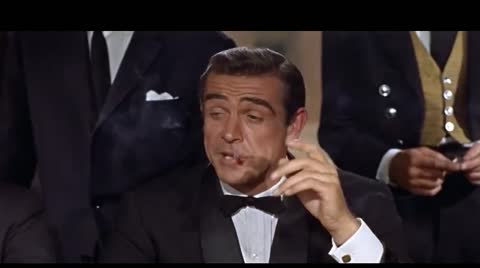
Dr. No Dr. No "Dr. No" is a 1962 British action film directed by Terence Young, starring Sean Connery and Ursula Andress. The film was released in the UK on October 5, 1962. As the inaugural installment of the 007 series, the story follows James Bond as he is dispatched to the Caribbean to investigate the death of a fellow intelligence agent, and with the help of local fisherman Quarrel and CIA agent Leiter, destroys a secret laboratory on a mysterious island. Plot Summary: British intelligence agent Commander Strangways, stationed in Jamaica, and his secretary are suddenly mysteriously murdered. To uncover the truth, Agent 007 James Bond is ordered to Jamaica to investigate. Before his death, Strangways had been cooperating with the CIA on a missile test program, so Bond first contacts American Lieutenant Leiter upon arriving in Jamaica. Through investigation, Bond discovers that Strangways was silenced because he had uncovered secrets about Dr. No. Dr. No is a Chinese man who purchased an island called Crab Key, where he engages in mysterious activities. Bond finds that the secretary working for the government is actually one of Dr. No's operatives, and turning the situation to his advantage, he uses her to kill the assassin sent by Dr. No. With the help of the fisherman Quarrel, Bond infiltrates Crab Key. On the island, he encounters a beautiful and charming marine biology expert named Honey. During a fierce battle with the island's guards, Quarrel is killed, and Bond and Honey are captured and imprisoned. It turns out that Dr. No is a member of SPECTRE, and he has built an atomic energy base on the island, attempting to sabotage a missile test and use it for terrorist activities. Bond manages to escape through the ventilation shaft of the cell where he is held, and disguised as a member of the island's staff, he infiltrates the control hall. Dr. No has already activated the reactor and begun the countdown. In the nick of time, Bond opens the throttle valve, damages the reactor, and triggers a massive explosion. Dr. No dies in the struggle. The island falls into chaos, and Bond rescues Honey just in time. The two escape Crab Key by motorboat. 007 successfully completes his mission and revels in the sweetness of love with his girlfriend. http://duanjufenxiang.ongugu.com/

The Russia House From Russia with Love A 1963 British action film directed by Terence Young is an action film co-starring Sean Connery and Daniela Bianchi, directed by Terence Young. The film was released in the UK on October 10, 1963. It tells the story of British agent James Bond helping a Soviet woman in possession of crucial intelligence escape to the West, only to fall into a trap set by an evil organization, and ultimately narrowly escape with his life. Plot Summary: The evil organization plans to use both the Soviet embassy in Turkey and British Intelligence to obtain the Soviet Union's latest code-breaking device. The code clerk at the Soviet embassy in Turkey is unwittingly selected as the one to steal the device, while British Intelligence dispatches Agent 007, James Bond (played by Sean Connery), to Turkey to carry out this perilous mission. Red Grant (played by Robert Shaw) is the organization's top assassin, who has never failed. Because 007 has repeatedly thwarted the organization's plans, they are determined to eliminate him, and so leak information that the code machine the British military desperately wants is in Russia. Meanwhile, a Russian woman named Tatiana (played by Daniela Bianchi) offers the British military a deal: if they help her escape to the West, she will hand over the code machine. British Intelligence sends 007 to Russia to rendezvous with Tatiana and retrieve the device. Meanwhile, the organization has already set an elaborate trap awaiting 007's arrival. 007 finds himself surrounded, escapes death several times, and ultimately makes it out safely, returning to London. http://duanjufenxiang.ongugu.com/

We Bury the Dead We Bury the Dead Australia, United States 2024 zombie horror thriller directed by Zach Hilditch (We Bury the Dead) is a zombie horror thriller co-produced by Australia and the United States, directed and written by Zach Hilditch, starring Daisy Ridley, Brenton Thwaites, Mark Coles Smith, Matt Wheelen, Deanna Cooney, and others. The film premiered at the Adelaide Film Festival on December 11, 2024, and was released in North America on January 2, 2026. The film tells the story of a woman whose husband goes missing after a disastrous military experiment, prompting her to join a "body retrieval team" to find him. Upon arriving at the experiment site, the group buries many bodies, only to discover that not all of the bodies are actually dead. As of May 2, 2026, the film has grossed over $3.8859 million worldwide. Plot Synopsis: A deadly electromagnetic weapon explodes off the coast of Tasmania, theoretically killing all living things on the island. But unexpectedly, those "dead" aren't truly dead after all. Australian officials call for volunteers to assist with the arduous cleanup effort. Many answer the call, including Ava (played by Daisy Ridley). Her husband Mitch (played by Matt Wheelen) was attending a business meeting on the island of Tasmania at the time. She hopes to find her husband, believing he might still be alive. As Ava embarks on this journey, she tries to reach the far end of the island where her husband once was. Traveling with her is Clay (played by Brenton Thwaites). Clay is a reckless person who doesn't understand the grief and determination Ava feels from losing a loved one. He always takes risks, careless of the consequences, forming a sharp contrast with the grief-stricken Ava. http://duanjufenxiang.ongugu.com/

Skyfall Skyfall A 2012 film directed by Sam Mendes is an action film produced by Sony Pictures Columbia, directed by Sam Mendes, written by Neal Purvis, Robert Wade, and John Logan, and starring Daniel Craig, Javier Bardem, Ralph Fiennes, Naomie Harris, Bérénice Marlohe, Albert Finney, and Judi Dench. It is the first IMAX film in 007 history. The film was released in the United States on November 9, 2012. The film tells the story of James Bond, who goes missing after a failed mission, and M, the head of the operation, is subsequently dismissed by her superiors. The surviving Bond, following M's orders and with the assistance of Q, travels to Shanghai to track down the real culprit. In 2013, the film won the Best European Film Award at the 57th David di Donatello Awards in Italy. http://duanjufenxiang.ongugu.com/

Octopussy Octopussy The 1983 film directed by John Glen is an action film co-produced by MGM and United Artists, directed by John Glen, and featuring Roger Moore and Maud Adams in leading roles. It was released in the United Kingdom on June 6, 1983. The film tells the story of a Soviet general who plots to provoke a war by planning to use nuclear missiles to destroy American bases in Europe, and takes advantage of Octopussy's circus troupe performances in Western Europe to ostensibly collaborate with Octopussy in smuggling jewelry, but in reality uses nuclear bombs to destroy a U.S. Air Force base in order to trigger a war. Bond is ordered to investigate and thwart the villain's scheme. Plot Summary: Bond's task this time is to find the priceless "Fabergé egg." The "Fabergé egg" that Bond's colleague 009 was holding at the time of his death turns out to be a fake, while the real egg has already made its way to an auction house. Bond is ordered to investigate, tracks down the buyer Kamal Khan at the auction, along with his henchman Gobinda and Magda, and then follows Khan to India. While gambling with Khan, Bond shows off the fake egg as a provocation. Later, Khan sends Magda to snatch the "Fabergé egg" from Bond and has Bond captured. After escaping, Bond discovers that Soviet General Orlov is involved, and he goes to the residence of Khan's business partner Octopussy to gather clues. He learns of the Soviet plot to use the beautiful Octopussy to plant bombs in her circus, and follows the trail to Octopussy's traveling circus to stop the scheme of using the circus as a cover to detonate a nuclear warhead and frame the United States. Fortunately, 007 discovers this Soviet plan to invade Western Europe in time and desperately prevents the atomic bomb from exploding amid the crowded circus audience, creating an extremely tense atmosphere. The film ends with a series of nonstop action sequences as Bond escapes all pursuits and finally dismantles the bomb. Octopussy and Bond subsequently return to India to hunt down Kamal Khan. When Octopussy is captured by the enemy, Bond, willing to sacrifice himself to save her, gets drawn into a highly intense life-and-death battle. http://duanjufenxiang.ongugu.com/

Storming Eighteen Levels of Hell
The 2025 American action film "Storming Eighteen Levels of Hell" will take audiences into a tense, adrenaline-fueled showdown of raw, hard-hitting combat. In the film, a lone gunslinger with extraordinary skills steps up resolutely in the face of a mercilessly spreading tide of darkness. His sole mission is to rescue the child of an innocent nun from these vicious criminal syndicates. In the name of justice, he will stop at nothing, plunging into the heart of the enemy's lair to wage a series of breathtaking gunfights and brutal hand-to-hand battles. This action-packed powerhouse not only showcases the protagonist's solitary courage and unyielding resolve, but also explores how to defend hope in the direst of circumstances. With a plot designed around high-octane twists and turns, it will leave audiences' adrenaline surging as they experience a truly thrilling, high-stakes adventure.

Diamonds Are Forever Diamonds Are Forever Directed by Guy Hamilton in 1971, this is an action film starring Sean Connery, Jill St. John, and Charles Gray. The film follows 007 as he is dispatched to South Africa to investigate an illegal diamond smuggling operation, only to uncover a much larger conspiracy during his investigation. Ultimately, 007 risks his life to successfully complete the mission. Plot Summary: South Africa is rich in diamonds, making smuggling rampant. A large batch of uncut diamonds goes missing, and coupled with a series of frequent murders, this draws the serious attention of British authorities. The British side dispatches 007 agent James Bond (played by Sean Connery) to investigate. Bond travels to Amsterdam under the guise of a diamond merchant and conducts a series of investigations. Following a trail to a large casino, he discovers that the mastermind behind it all is his old nemesis, the evil SPECTRE leader Ernst Stavro Blofeld (played by Charles Gray). The missing diamonds are not merely a simple smuggling case—Blofeld is using these various gems to build a devastating laser satellite weapon designed to destroy large targets on land, sea, and air. With the help of the beautiful Tiffany Case (played by Jill St. John), Bond prepares to stop this madman's criminal scheme. To achieve his goal, Bond must first fight off numerous adversaries—the peculiar Mr. Wint and Mr. Kidd—and nearly dies at their hands. Then, Bond locates the reclusive billionaire Willard, the only person who knows Blofeld's whereabouts. In the end, with Case's assistance, Bond joins forces with government troops in a life-and-death battle against Willard's gang, annihilates the villains, and completes the mission. http://duanjufenxiang.ongugu.com/
"The Last Water Source"
A thriller directed by Hubert Davis
"The Last Water Source" is a thriller directed by Hubert Davis and starring Sheila McCarthy, Natasha Mumba, and Joanne Boland. It premiered at the Fantasia International Film Festival in Montreal, Canada, on July 21, 2025.
Free movie downloads
http://duanjufenxiang.ongugu.com/

Volcano of Crisis
"Volcano of Crisis" is a 2025 horror film directed by Icelandic director Uggla Hauksdóttir. The film tells the story of Anna Arnardóttir, Iceland's leading volcanologist, who simultaneously faces the threat of a volcanic eruption and an extramarital crisis. While Anna deals with eruption warnings that could engulf the capital, she becomes embroiled in a passionate affair with a geological surveyor, while her police husband begins tracking her movements, setting off a chain of suspenseful events.
Free movie downloads
http://duanjufenxiang.ongugu.com/
The Necklace of Curses
Directed by Juan Pablo Arias Muñoz and written by John Ducey, *The Necklace of Curses* is an American horror film released in the United States on September 27, 2024. The movie stars Violet McGraw (known for *Black Widow* and *The Haunting of Hill House*), Madeleine McGraw (*Ant-Man and the Wasp* and *Toy Story 4*), and Henry Thomas (*E.T. the Extra-Terrestrial*), among others, and is set in the 1960s.
The story follows a fractured family: after the mother separates from her alcoholic husband, the two daughters, while adjusting to the family upheaval, discover that a vintage gift from their father unleashes a dark force that gradually threatens the entire household's survival. Through supernatural elements, the film mirrors the crisis in family relationships, exposing the terrifying menace lurking within everyday objects.

Pumpkinhead
"Pumpkinhead" is a 2025 American horror film directed by Jem Garrard, starring Bean Reid, Adeline Lo, and Kevin McNulty.
[Plot Summary] The film follows young Sam, who moves to a new town after his father's death. After he steals a prized pumpkin, his older brother mysteriously disappears while returning it, and all the adults forget that his brother ever existed. Sam must team up with his new friend Becca to unravel the mystery, break an ancient curse that causes children to vanish and be forgotten by adults, and face the terrifying scarecrow monster guardian.

The Man with the Golden Gun The Man with the Golden Gun The Man with the Golden Gun is a 1974 American action film directed by Guy Hamilton, starring Roger Moore, Christopher Lee, Britt Ekland, and Maud Adams. The film premiered in the United Kingdom on December 19, 1974. The story follows 007, who is assigned to recover a solar energy converter but finds himself targeted by a professional assassin nicknamed the Man with the Golden Gun. As 007 completes his mission, he engages in a final showdown with his adversary. Plot Summary: British MI6 receives a golden bullet engraved with James Bond's code number "007," and everyone concludes it comes from Scaramanga, a notorious San Francisco assassin who uses a golden gun. His weapon is made of pure gold but is disguised as unremarkable everyday items: a gold pen serves as the barrel, a lighter as the chamber and hammer, a cigarette case as the grip and magazine, and a shirt cufflink as the trigger. Concerned for Bond's safety, M recalls Bond, who was investigating scientist Gibson—a man holding information on solving the energy crisis through solar power. Bond decides to secretly track down Scaramanga. The Man with the Golden Gun is Scaramanga, a man with a golden pistol, born in a circus. His father was Cuban and his mother English. By age ten, he had mastered trick shooting, and by fifteen, he had become an assassin. This man with three nipples charges one million per hit. James Bond travels alone to Beirut to find Scaramanga's whereabouts, where he discovers a spent bullet casing left by the Golden Gunner. Following this clue, he locates Lazar, who makes the golden bullets in Macau, and the beautiful woman Andrea Anders, who collects them for the assassin. Bond trails Anders to a suite at the Peninsula Hotel in Hong Kong, forcing her to reveal information about Scaramanga, including his appearance and plans. Anders directs Bond to the Bottoms Up Club. Scaramanga appears at the club, and Gibson steals the solar power station's core, the "Solex Agitator," from Scaramanga's dwarf henchman. As Lieutenant Hip escorts Bond away from the bar, Bond keeps defending himself, and the two proceed to the wreck of the Queen Elizabeth liner docked in the harbor, where Bond meets Q and M. M orders 007 to intercept the Agitator and assassinate Scaramanga. http://duanjufenxiang.ongugu.com/

The Spy Who Loved Me The Spy Who Loved Me The 1976 Bond film is an action movie directed by Lewis Gilbert, starring Roger Moore, Barbara Bach, Curd Jürgens, Richard Kiel, and Caroline Munro. It was released in the United Kingdom on July 7, 1977. The film primarily tells the story of Bond, an agent of British MI6, who teams up with a KGB female spy to investigate a shipping magnate's plot to dominate the world and destroy his underwater city. Plot Summary: Karl Stromberg (Curd Jürgens), a world-famous wealthy shipping magnate, builds an "underwater city" to conquer the world and satisfy his own ambitions. He hires scientists at high salaries to develop a submarine tracking system, seizes British and Soviet nuclear submarines for himself, and aims their nuclear missiles at New York and Moscow, planning to wipe out both superpowers in one stroke and dominate the world. Just as Britain and the Soviet Union are puzzled by the mysterious disappearance of their nuclear submarines, Britain sends Agent 007, James Bond (Roger Moore), to uncover the truth, while the Soviet Union dispatches Major Anya, a female agent with the codename "X3." Following clues to Cairo, Egypt, James Bond discovers that the contacts holding information on the submarine tracking system are dying one after another, and Bond himself is hunted by numerous assassins, including "Jaws." After a series of confrontations, 007 and the Soviet female agent arrive at the underwater base, and after a battle of wits and a life-and-death struggle, they finally destroy the underwater base. http://duanjufenxiang.ongugu.com/

Jurassic Park Part 1 / Part 2 / Part 3 Jurassic Park Trilogy The Lost World Jurassic World Jurassic World Dominion Jurassic Park Trilogy An American film series directed by Steven Spielberg in 1993 and Joe Johnston, with Spielberg directing the first two installments and Joe Johnston taking over for the third, this is an American sci-fi adventure film series adapted from Michael Crichton's novel of the same name, spanning from 1993 to 2001. The first two installments are based on the original novel, with the first film establishing the core premise of resurrecting dinosaurs through genetic technology to create a theme park that spirals out of control, using groundbreaking visual effects to recreate dinosaur ecology, grossing over $900 million worldwide and winning three Academy Awards; the 1997 sequel set a first-weekend box office record with $92.7 million; the 2001 third installment follows an expedition team facing a crisis involving genetically modified dinosaurs, with Spielberg serving as producer. The series revolves around dinosaur outbreak incidents on Isla Nublar, Isla Sorna, and Isla Sorna, using CGI and animatronic technology to create visual spectacles of prehistoric creatures, exploring the conflict between technological ethics and natural laws. The series launched in 2015 continues this worldview, ultimately achieving a plot fusion of the two franchises. With Spielberg directing the first two installments and Joe Johnston taking over for the third, this is an American sci-fi adventure film series adapted from Michael Crichton's novel of the same name, spanning from 1993 to 2001. The first two installments are based on the original novel. http://duanjufenxiang.ongugu.com/

rose rose War of the Roses The War of the Roses A 2025 British-American black comedy film directed by Jay Roach, written by Tony McNamara, and starring Benedict Cumberbatch and Olivia Colman. The film was released in North America on August 29, 2025. It is a remake of the 1989 film, telling the story of Theo and Ivy, a seemingly perfect couple whose lives are the envy of all their friends. But beneath the surface of their perfect family lies a powder keg of simmering fights and resentment, which are ignited when Theo's career dreams collapse. As of February 15, 2026, the film has grossed over $51.9812 million worldwide. Plot Summary: A seemingly perfect couple, Theo (Benedict Cumberbatch) and Ivy (Olivia Colman), lead a life that all their friends envy—successful careers, a happy marriage, and well-behaved children. But beneath the facade of a perfect family, a storm is brewing. When Theo's career dreams crumble and Ivy's career as a chef takes off, their ideal life falls apart, and the hidden resentment between the couple gradually surfaces as they engage in a fierce battle over the division of their assets. http://duanjufenxiang.ongugu.com/

Thunderball Thunderball A 1965 British film directed by Terence Young. It is an action film directed by Terence Young, starring Sean Connery, Claudine Auger, Adolfo Celi, and others. It was released in the United Kingdom on December 29, 1965. The film tells the story of British agent James Bond, who receives orders from his superiors to travel to the Bahamas to stop the terrorist organization SPECTRE's plot and recover two nuclear bombs. Plot Summary: British military command sends 007 agent James Bond (played by Sean Connery) on a mission crucial to the safety of people in major British cities. The mission stems from a worldwide terrorist organization—SPECTRE—which, through an undercover mole, learned of America's plan to transport two atomic bombs to Britain. They intercepted the U.S. military convoy midway and seized the bombs. After succeeding, SPECTRE blackmails the British government for £100 million, threatening that Britain could be destroyed at any moment by an atomic attack. The situation is extremely critical. Upon receiving SPECTRE's ransom demand, the British government deploys all 00-level agents to find the nuclear bombs within the specified deadline and resolve the crisis. James Bond arrives in the Bahamas to locate Domino (played by Claudine Auger), the sister of pilot Derval, and Domino's "guardian" turns out to be Emilio Largo (played by Adolfo Celi), SPECTRE's number-two man. Bond infiltrates SPECTRE's headquarters before its final ultimatum expires to thwart its scheme. Bond must not only evade shark attacks but also resist the traps of a beautiful female assassin. It seems like an impossible mission, but fortunately, with the help of the beautiful Bond girl Domino, who secretly works against SPECTRE, Bond repeatedly escapes the enemy's tracking and pursuit, drawing closer and closer to success. http://duanjufenxiang.ongugu.com/

The Twits The Twits The animated film released by Netflix is an animated film from Netflix, adapted from the children's novel of the same name by British author Roald Dahl. The project was initially developed as an animated series, but was rebooted in 2024 and converted into an animated film format. The film is directed by Phil Johnston, with co-directors including Todd Demong and Katie Shanahan, and the screenplay is by Phil Johnston, Meg Favreau, and Roald Dahl. The voice cast includes Natalie Portman, Emilia Clarke, Johnny Vegas, Marg Martindale, and others. The film is produced by Jellyfish Pictures, and is one of the last projects completed by the studio before it shut down due to financial difficulties. The film's soundtrack includes original songs by David Byrne and Hayley Williams. The film was released on Netflix on October 17, 2025, with a runtime of 98 minutes. The film focuses on the despicable Twits, a couple who run a dangerous theme park called "Twitlandia" and try to take control of the entire town. Two orphans team up with a group of magical animals to save the city by turning the Twits' own tricks against them. The film blends animation, adventure, and comedy elements, and director Phil Johnston has stated that its core message is "Don't be a fool." The film is adapted from Roald Dahl's children's novel of the same name. The film focuses on the despicable Twits, who run a dangerous amusement park called "Twitlandia" and attempt to control the entire town. Two orphans (Pippa and Jeremy) team up with a group of magical animals, using the Twits' own methods against them, and are forced to become as cunning as the Twits in order to save the city. The film's central conflict is the Twits' evil rule against the rebellion of the orphans and the animals. http://duanjufenxiang.ongugu.com/

A View to a Kill A View to a Kill The film directed by John Glen in 1985 is an action film directed by John Glen, starring Roger Moore, Christopher Walken, Grace Jones, and Tanya Roberts. The film was released in the United States on May 22, 1985. The story follows James Bond as he retrieves a microchip from a deceased colleague, then investigates the Zorin Corporation, which developed the chip, to uncover the truth behind the incident. Plot Summary After James Bond recovers the technological secret "microchip" from a deceased colleague in Siberia, he discovers that the sample is identical to one from Britain, proving that the KGB has infiltrated Britain's high-tech research field. Bond is ordered to investigate Max Zorin, a wealthy high-tech industrialist, but his cover is blown, and he is thrown into a lake in a car. After narrowly escaping, Bond follows Zorin to the United States. Bond learns from Soviet spy Ivanova that Zorin plans to destroy a silicon mine in San Francisco, so he gives chase and removes the bomb at the last moment. To save his girlfriend Stacey Sutton, Bond engages in a thrilling duel with Zorin on the Golden Gate Bridge and ultimately emerges victorious. http://duanjufenxiang.ongugu.com/